
What is Hypertension and Why It Matters
High blood pressure (hypertension) is the “silent killer” for a reason. It is a condition in which blood pressure against the artery walls is all the time above normal, usually 140/90mmHg or greater. Unlike many health conditions, hypertension can go undetected for many years, even though it’s harming your cardiovascular system.
The risk is inside your body. As blood pressure increases, your arteries get thicker and less flexible, which is known as atherosclerosis. This greatly raises your chances of serious health problems like heart attack, stroke, kidney disease, and heart failure. Indeed, high blood pressure is a major preventable cause of early death worldwide.
So why is this a concern now? The bright side to this is that if hypertension is detected early, blood pressure management is easily task. Most people can reach their desired blood pressure with monitoring, medication and lifestyle modifications and significantly lower health risks. This is where regular blood pressure control by your GP in Belconnen is important.
How GPs Diagnose High Blood Pressure
It is not as simple as a single blood pressure reading at the doctor’s office to diagnose hypertension. Your GP in Belconnen takes a systematic approach to ascertain accuracy and to minimise “white coat syndrome” (the tendency to record high blood pressure in a medical environment due to stress or anxiety).
The diagnostic process usually consists of the following steps:
- Initial screening: Your GP makes several readings at various appointments, and your blood pressure is naturally different from one day to the next and from one week to the next.
- Home BP monitoring: The readings you take at home are sought for a few days to get an accurate baseline.
- Ambulatory monitoring: Patients with some types of devices record readings for 24 hours in a portable case to gain insight into actual patterns.
- Physical exam: Your doctor looks for other health problems that could be causing high blood pressure.
- Blood tests: Measuring kidney function, cholesterol and glucose levels to see the overall cardiovascular risk
This comprehensive plan will help your GP not treat isolated high readings but true hypertension control that needs intervention.
Blood Pressure Targets for Different Age Groups
As research advances, targets for blood pressure have changed. Your GP in Belconnen will discuss with you your age, health status and existing conditions and set suitable targets.
General guidelines:
- For adults 60 years old or younger: Target <140/90 mmHg.
- Older adults (60 years or over): <150/90 (many will benefit from more aggressive control)
- Healthy adults without diabetes or kidney disease: Goal is under 120/80 mmHg, which is associated with a lower risk of developing type 2 diabetes and/or kidney disease.
- For adults who have a high cardiovascular risk, tighter targets might be suggested based on individual assessment.
The numbers are the systolic (top number – the pressure when the heart beats) and diastolic (bottom number – the pressure between beats). Your GP will discuss your cardiovascular risk profile with you at your consultation and your personal target will be based on your cardiovascular risk.
Home Monitoring Best Practices
The most effective tool in the arm of GP care for hypertension is to develop a dependable home monitoring schedule. This allows your doctor to have real-life information and remain involved in your management.
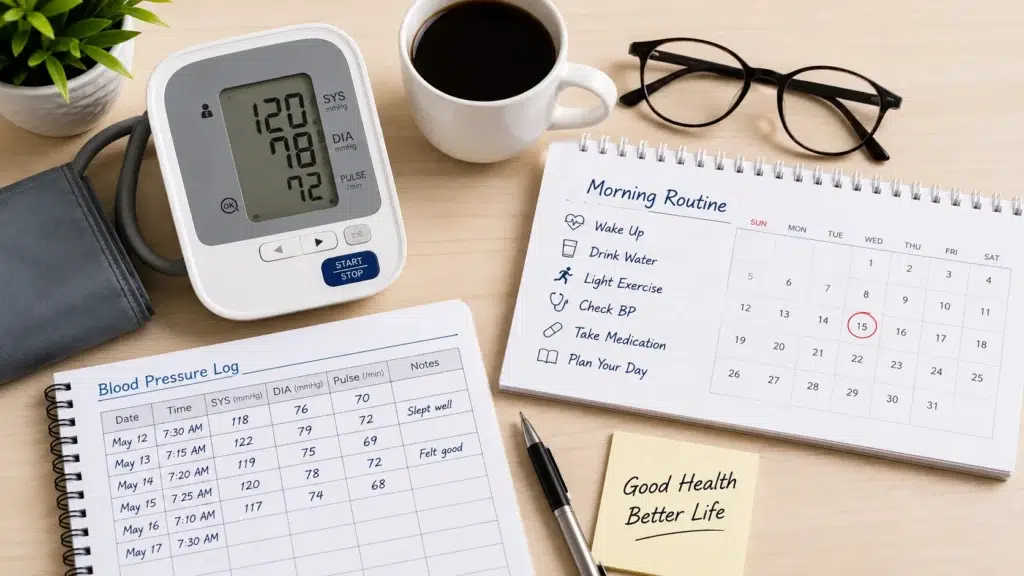
Home blood pressure monitoring log with digital BP monitor and patient readings
To ensure accurate home monitoring, the following best practices are suggested:
- Use an accurate device: Wrist monitors are less accurate than upper arm monitors and ones that have been certified as accurate should be used
- Sit properly: Feet on floor, back supported, arm at heart level
- Avoid caffeine and nicotine and exercise for 30 minutes before taking a reading: Take a 5 minute break before taking a reading, avoiding caffeine, nicotine and exercise for 30 minutes before each reading.
- Take readings at the same time each day: Morning (before medication) and evening readings.
- Maintain a log: Record any reading with the date, time, and any notes on how it affected you or if there were any unusual experiences.
- See your GP: Take your log with you to appointments – these readings are more accurate than GP readings
- Avoid over-reading: Keep the pressure down and do not read too often as this can make people feel more anxious.
Most people respond well to having readings done twice a day for 5-7 days a month, providing them with a better understanding of their blood pressure pattern and not causing them any anxiety when taking blood pressure.
Medications for Blood Pressure Control
If lifestyle changes are not enough, medications are also a key element in treatment for hypertension. There are several different types of drugs that control blood pressure, and these have different modes of action:
ACE Inhibitors and ARBs (like lisinopril, ramipril, losartan)
- Relax blood vessels, prevent them from contracting due to angiotensin.
- Provide kidney protection particularly diabetics
- Often first-line treatment
Beta-Blockers (like metoprolol, bisoprolol)
- Decrease rate of heartbeats and the strength of contraction
- Great for people with heart disease or anxiety.
- May cause fatigue in some people
Calcium Channel Blockers (such as amlodipine, diltiazem)
- Relax arterial muscles
- Tolerated with little side effects
- Available for use in older adults.
Diuretics (like hydrochlorothiazide, chlorthalidone)
- Get rid of excess water in urine
- Combined with other medications, this is often used.
- May alter electrolytes; monitor.
Combination Medications
- Two or more medicines in one tablet (to increase adherence)
- But frequently required in moderate or severe hypertension.
Your Belconnen GP will select medicines according to your blood pressure, other health problems, side effects, and how well you respond to the medicines. Taking two or more medicines for control is perfectly normal, as most people need more than one medicine to control their asthma. Periodic review helps to keep your program at its best.
Lifestyle Modifications: The Foundation of Management
Medications are crucial, but lifestyle changes can make the biggest difference over the long term to managing hypertension.
Dietary Changes
- Limit sodium: < 2,300mg/day (approximately 1 teaspoon of salt per day)
- DASH diet: Focus on fruits, vegetables, whole grains and lean proteins
- Reduce alcohol: No more than 2-3 drinks a day for men and 1-2 per day for women
- Cut down on sugar – especially sugary drinks and processed foods
Physical Activity
- Get at least 150 minutes of moderate-intensity aerobic activity every week.
- Add in resistance training 2-3 times per week
- Short periods of regular activity sessions are beneficial too
- Before beginning a new exercise routine, please check with your GP.
Weight Management
- Weight loss of 5-10% of body weight can help reduce blood pressure.
- Losing a few pounds makes a difference!
Stress Reduction
- Do deep breathing, meditation, or yoga.
- Get the right amount of rest (7–9 hours per night)
- Limit caffeine and stimulants
- Talk to a counselor or try a stress management program.
Smoking Cessation
- Smoking is a huge risk factor for cardiovascular disease!
- Your GP can help you to choose a stop-smoking program and medications to help you quit.
The amazing fact: that extensive lifestyle changes can lower blood pressure by 10-20 mmHg, the same amount as being produced by a single dose of medication therapy. These changes, along with the correct medications, provide the best management plan.
Risk Assessment: Cardiovascular Disease and Stroke
It is important to determine your own risk so that you can manage it appropriately. Your GP does not only treat a number, they look at your overall cardiovascular risk profile.
The following factors were identified as key risk factors:
- Risk factors include age and sex (men and post-menopausal women).
- Risk is increased because of family history (genetic predisposition)
- Diabetes: Heart and blood vessel risk is greatly increased.
- High cholesterol works in conjunction with hypertension to harm arteries
- Smoking: Risk is greatly increased
- Obesity: Especially belly fat
- Physical inactivity: Increases overall cardiovascular stress
- Hypertension is a contributing factor and a complication of CKD.
Your GP might carry out a formal risk assessment (such as the Framingham risk score calculator or Australian absolute cardiovascular risk score calculator) to work out whether you need to be more aggressively treated for blood pressure or whether you need other preventive medicines. Aside from hypertension, a person with several risk factors might need tighter targets and more intensive treatment than a person with hypertension alone.
Regular Review and Monitoring Schedule
Hypertension control is not a “set and forget” affair. Follow up will keep your treatment effective and will be adjusted if necessary.
Typical monitoring schedule:
- Initial diagnosis: Every 2-4 weeks until blood pressure controlled
- Established hypertension (HTN): Should be monitored every 3-6 months.
- Well controlled and stable blood pressure (BP): Home BP monitoring between annual checks
- After medication change: Follow up in 2-4 weeks
- With other chronic conditions: More frequent appointments, as part of comprehensive disease management
Your GP will:
- Regularly take blood pressure measurements
- Evaluate side effects of medications
- Review lifestyle progress
- Monitor for hypertension complications: kidney function, heart health.
- Make adjustment to medication if necessary
- Check for other cardiovascular risk factors
This continuous partnership with your GP means your hypertension management continues with your health – an important part of a complete chronic disease management plan we cover in our complete chronic disease guide.

Lifestyle modifications for blood pressure control healthy eating, exercise, yoga, and stress management
When to Contact Your GP Urgently
Though most hypertension will be managed over time, there are a few instances where immediate medical attention is warranted:
If you have any of the following symptoms, see your GP ASAP:
- Sudden, severe headache with chest pain or shortness of breath
- A change in vision or blurred vision
- Confusion/disability with speech
- Weakness or numbness on one side of the body, especially in the arms and/or legs.
- Severe nosebleeds
- Hypertension (systolic pressure over 180 mmHg and/or diastolic pressure over 120 mmHg, but no symptoms)
If you have an appointment coming up in the near future, then you should:
- New or increased symptoms of blood pressure drugs
- Despite taking medications, your home readings are still too high.
- You’re having difficulty taking medications as prescribed
- Made major lifestyle changes and need to evaluate medication needs again.
- There are questions you have about your treatment plan
These may be signs of a hypertensive crisis or other serious condition that needs immediate evaluation.
Integration with Other Chronic Disease Management
Many individuals don’t have hypertension as their only condition. Your GP helps you manage your high blood pressure as part of an overall plan for chronic disease management, which may also involve managing other conditions you have.
Common co-existing conditions:
- Diabetes: Hypertension exacerbates diabetes complications; better control needed; Control blood sugar is key to preventing complications
- Chronic kidney disease: Hypertension injures the kidneys, and kidney disease increases hypertension (we need to monitor this vicious cycle)
- High cholesterol: Both demand the same lifestyle changes and treatment of the high cholesterol.
- Obesity: To lose weight for more than one health issue at a time.
- Sleep apnea: Hypertension: Frequently associated with sleep apnea and is a separate diagnosis that should be treated.
Your GP makes sure all these are taken care of together, that the medicines you take have multiple benefits, if possible, and that lifestyle changes have a positive effect on every aspect of your health. As outlined in our comprehensive chronic disease guide, this ‘whole-of-system’ approach delivers much better results than treating each condition individually.
Frequently Asked Questions About High Blood Pressure
1: What’s the difference between systolic and diastolic blood pressure?
The top number (systolic) represents the pressure in the blood vessels as your heart contracts and pumps blood. Diastolic pressure (the bottom number) is the pressure between beats, when the heart is at rest. Both are important for cardiovascular health, but the former is typically more important when diagnosing and treating. For instance, a person with a blood pressure reading of 150/80 has more risk than someone with a blood pressure reading of 140/70, although the second person’s blood pressure is nearly the same. Your GP will check both numbers when determining your blood pressure status.
2: If one’s blood pressure is normal, can one stop taking the BP medicine?
Never stop taking blood pressure medicines, as prescribed, without talking to your GP first. You’re taking the medication for a reason: your readings are normal. Once stopped, blood pressure will usually go back up in days or weeks, putting you at risk for stroke and heart attack. If you’ve had consistent normal results, some patients ask about reducing their dose; your GP can consider adjusting your dose if your results have been consistently normal and other factors are taken into consideration. Most people with high blood pressure, though, need to struggle with it for a lifetime. The objective is to reach the lowest dose possible to keep you in your target range and not to end treatment.
3: Why do my blood pressure readings change when I’m at my doctor’s office?
This is a very common occurrence known as “white coat syndrome” or “white coat hypertension”. In clinical settings, anxiety triggers your stress response, which is a brief rise in blood pressure. Many people are affected by this response in the clinical environment, a setting that is unfamiliar, medical equipment, and health findings. That’s why doctors recommend home monitoring, your blood pressure in your own home is more accurate. If your office readings are consistently higher than your home readings, tell your GP about it – this can help them decide on your treatment.
4: Is high blood pressure a lifelong management or can it be cured?
The majority of cases of hypertension are chronic and need to be monitored throughout the person’s lifetime. But “cured” is the wrong frame—getting and keeping blood pressure within target levels, any way you can: with medications and/or lifestyle changes. For some, especially those with borderline high numbers who haven’t yet needed to take medication, lifestyle changes might be enough to bring their blood pressure into a normal range and they may never need medication. However, even those who achieve these levels need to be monitored for several years as their blood pressure can go back up. As in diabetes, there are those who can keep hypertension in check with lifestyle changes, those who can keep it in check with medication, and those who must do both, but who must be constantly vigilant.
5: How fast do blood pressure meds start to work?
Some medicines take time to work. Blood pressure drugs start to work within 2-4 weeks, although it can happen in a few days for some people. For this reason, your GP will usually have follow-up appointments 2-4 weeks after you start or change your dose—this is because it takes time for the medicine to work. During this time, it is important for you to be patient, do not change medications or doses without direction, and wait and see how effective the medications are. Also, you need to give your body time to acclimatize before side effects (if any) are felt. For some patients, the symptoms get worse before better, but this typically clears up within a couple of weeks.
6: Do you need to take several BP medications?
Yes, the vast majority of people with high blood pressure need two or more drugs to get their blood pressure under control. Your GP will usually begin with one medicine and then add or change if necessary depending on how you respond. Combination therapy is not a sign of failure of treatment but rather is routine practice for moderate to severe hypertension. Medications come in various classes of drugs and often a combination of drugs is more effective at controlling symptoms than increasing the dose of one medication. The use of an ACE inhibitor combined with a calcium channel blocker is, for example, more effective than using either alone to maximum effect. Medications work together in combination therapy, like a team working together.
7: If my blood pressure is controlled with medication, do I need to monitor my blood pressure?
Yes, home monitoring is still useful even if your blood pressure is under control. Regular reading (usually monthly or as recommended by your GP) will allow you to make sure that your current medications are working well. Gradual increases may also be seen, as a result of medication tolerance, lifestyle changes or other factors, and will be identified by home monitoring, giving time to make adjustments before issues arise. Plus, you stay up-to-date with your health management through monitoring and have data to share at your annual health review with your GP. This frequency is less than in initial management, but is continued for life.
8: What is the place of lifestyle changes in comparison to drugs used to lower blood pressure?
Adopting a changed lifestyle may be a very effective treatment, if not more effective than medicine. The evidence is consistent that a comprehensive lifestyle modification (diet, exercise, weight loss, stress reduction, salt reduction, limited alcohol) can reduce blood pressure by 10-20 mmHg. In certain individuals who have borderline high blood pressure, such changes may make their blood pressure readings normal. For the majority of individuals who have been diagnosed with hypertension, however, drug treatment is also required, particularly those who have moderate to severe hypertension. The ideal treatment is a combination of both: medications will control the disease regularly and effectively, and lifestyle changes will make them more effective, and decrease the risk of heart disease later in life. Your GP prescribes the mixture that is most suitable for you.
Take Control of Your Blood Pressure Today
You can get control of your health without high blood pressure. Good blood pressure control, correct treatment and your involvement can help you reach and maintain your target blood pressure and greatly lower your risk for more serious cardiovascular events.
Get your blood pressure under control with the help of our best GP in Belconnen. Make an appointment now. Our highly trained GPs offer a full blood pressure evaluation and tailor the treatment to your needs, as well as offering support throughout the process.
If you’ve been diagnosed with hypertension, battling high blood pressure, or want to do what you can to get your blood pressure under control—we’re here to help. Call Belconnen General Practice today to schedule your consultation and start your journey towards a healthier heart!