When it comes to planning an international trip, there’s more to it than just booking flights and rooms. It’s important to be protected from the diseases you might encounter in your destination. Your GP in the Belconnen area can assess your vaccination needs and ensure you’re protected before departure.
Why Travel Vaccinations Matter
Australia’s vaccination program includes local diseases. There are health risks in many overseas countries that are not present in Australia. Yellow fever, typhoid and hepatitis A are still prevalent in certain regions of Asia, Africa and Central America.
Travel vaccinations are vaccines that protect against diseases you might get while traveling. One shot or a series of shots can prevent serious illness, hospitalization or even death. Your GP will decide which vaccines are appropriate for your destination.
Vaccination requirements also differ from country to country. There are some countries that require proof of vaccination for entry. Some vaccines are recommended depending on the time of travel and the destinations. Your GP keeps up to date with international health requirements.

Travel Vaccinations at Belconnen General Practice
Pre-Travel Health Consultations: Understanding the process
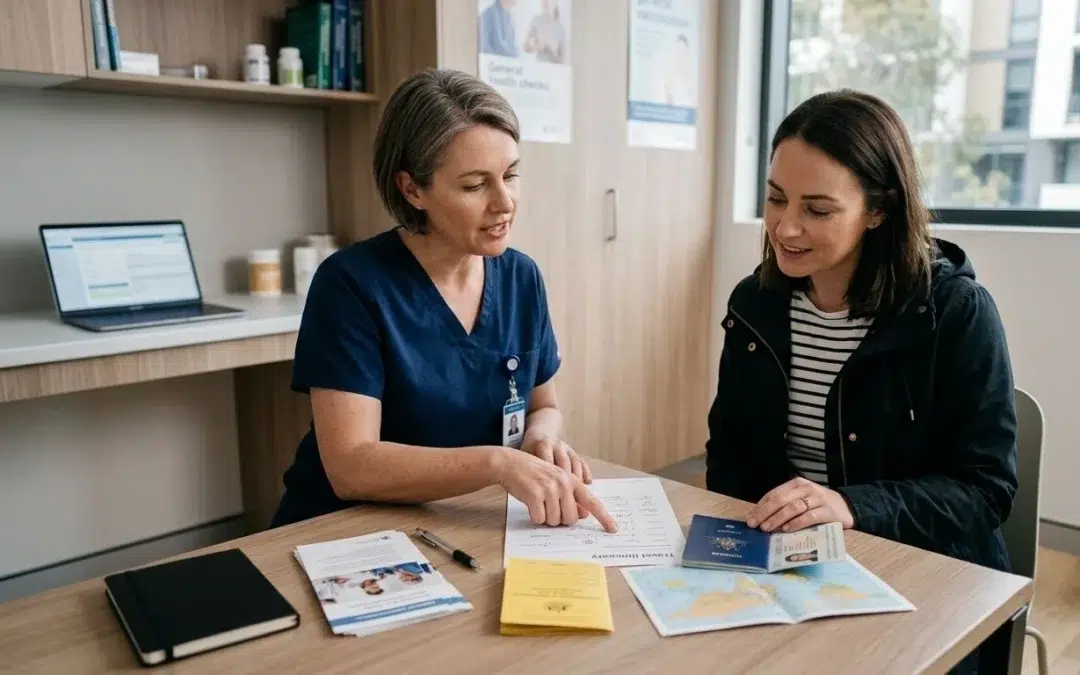
Pre-travel consultations are not limited to vaccines. Your GP checks your complete health record to make sure you are safe to travel. They evaluate your health status, any medical conditions, and medications you are taking.
Timing for the consultation is important. Please make your appointment 4-6 weeks prior to travel. This will give enough time to administer vaccines and build immunity. Some vaccines need more than one dose, which are given weeks apart.
Your GP asks in-depth questions about what you are going to be doing. The health risks of climbing mountains are different from those of sightseeing in the city. Contact with local people or rural areas will expose you to infectious diseases. Recommendations are also affected by the type of accommodation and length of the trip.
Common Travel Vaccines Explained
Hepatitis A
Hepatitis A is transmitted via contaminated food and water. Countries that have inconsistent sanitation standards are at higher risk. Those who eat local food or street food are at increased risk.
The vaccine consists of two doses, given 6-12 months apart. Immunity starts to form after 2 weeks of the first dose. This vaccine is appropriate for most travelers to other countries.
Typhoid
Typhoid fever is a serious bacterial disease that can be transmitted by contaminated water and food. Symptoms are high fever, headache, and abdominal pain. The disease is treatable with antibiotics, but can be life-threatening.
There are two types of vaccination: injection and oral capsule. Your GP will advise you on the most appropriate one depending on your travel plans. Immunity is short lived, and booster doses may be necessary for repeat travellers.
Yellow Fever
Yellow fever is a viral disease spread by mosquitoes. There is a risk in parts of Africa, South America and the Caribbean. The disease results in high fever, jaundice and may be life-threatening.
Yellow fever vaccination is mandatory for entry from endemic areas in many countries. Most individuals will be immune for life after vaccination. Your GP will provide you with an International Certificate of Vaccination, which will show your protection.
Japanese Encephalitis
Japanese encephalitis is a disease of the brain and nervous system. The virus is transmitted by mosquitoes, mainly in rural areas of Asia. The risk is higher during summer and monsoon season.
The recommendation for vaccination will vary depending on the destination and length of the trip. Short stays in urban areas pose less risk than longer stays in rural areas. Your GP decides if you need to be vaccinated for your trip.
Additional Vaccinations
Depending on your destination, other vaccines may be recommended. Immunity should be up to date; there are measles outbreaks in some countries. Vaccines for Japanese encephalitis, rabies and meningococcal may be indicated.
Your GP personalises recommendations based on your individual circumstances. No two travellers are alike.
Malaria Prevention
Malaria prevention is not limited to vaccination in some places. Malaria is transmitted by mosquito bites and is not vaccine-preventable. Rather, antimalarial drugs decrease the risk of infection.
Your GP will prescribe suitable anti-malarial drugs depending on where you are going and how long you will be there. Medications are started prior to travel and continued after travel to provide protection. The directions for using these medicines are different for each type.
Avoidance measures are also important. Further protection is offered by insect repellent, long sleeves and bed nets. Your GP talks to you about practical prevention as well as taking medication.
Handling side effects of vaccines
The side effects of most travel vaccines are very mild. Common side effects are slight arm pain, a low-grade fever or temporary fatigue. These effects usually clear up in 24-48 hours.
There are potential serious side effects, although they are uncommon. Your GP talks with you about possible side effects before you are vaccinated. They offer advice on how to deal with minor effects and when to seek medical attention.

Travel Vaccinations at Belconnen General Practice Australia
Tell your GP if you have had any reactions to vaccines in the past. This history is used to inform recommendations for future vaccinations.
Vaccination Records and Documentation
Keep detailed records of all vaccinations received. Your GP will give you a written record of the dates and names of the vaccines. Certain countries have vaccination requirements.
An official document is provided in the form of the International Certificate of Vaccination. This certificate is issued by your GP for vaccines such as Yellow Fever. Carry this document with your passport when travelling.
Paper vaccination records are supplemented by digital records. Your GP will be able to give you guidance on how to keep records easily accessible when travelling overseas.
Special Considerations
Pregnancy
Some vaccines are unsafe during pregnancy. Talk to your GP about pregnancy or plans to become pregnant before vaccination.
Chronic diseases
Diseases such as diabetes or heart disease might affect vaccination recommendations. Your GP will determine your personal risk and benefit.
Medications
Some medicines interfere with the effectiveness or safety of vaccines. Tell your GP if you are taking any medicines before you are vaccinated.
Allergies
Vaccine allergies are rare but serious. Before vaccination, tell your GP if you have any allergies, particularly egg allergy.
After Your Vaccination Appointment
Give time to build up immunity. Most vaccines will give full protection within 1-2 weeks. Plan accordingly if travelling immediately after vaccination.

Travel Vaccinations at Belconnen General Practice ACT
Certain vaccines may need to be given prior to travel. Immunity to yellow fever is acquired in 10 days. Other vaccines require weeks to be effective.
Record any side effects you have. This information will assist your GP in making decisions about future vaccinations. Very few people are affected to any great extent.
Make a reservation for your pre-travel consultation. Reserve your pre-travel consultation.
Make an early appointment with your Belconnen GP before travelling. Please do not wait until a week before departure. Vaccine availability may be limited or urgent appointment slots may be required due to last-minute bookings.
Give your GP information about where you are going, when you are going and what you are doing. This information is used to inform recommendations. If available, take your vaccination record.
Make sure to discuss pricing when booking. The National Immunisation Program provides for some vaccines. Some need to be paid, but many travel insurance policies include vaccination costs.
FAQs
When should I make my travel vaccination appointment?
Schedule your pre-travel consultation 4-6 weeks prior to travel. This enables your GP to determine your personal health requirements, suggest the right vaccines and give more than one dose if necessary. There are some vaccines that require a certain interval between doses; if there is a travel schedule that is too close to the vaccine schedule, it may not be possible to receive all required vaccines. If travelling earlier, seek advice from GP as soon as possible. It’s better to be partially protected than unprotected – your GP can still make sure you get the vaccines you need.
If I only visit cities, do I need the yellow fever vaccine?
Yellow fever vaccine requirements and recommendations depend on your specific destination and itinerary. Some countries require proof of vaccination for entry, even if travelling for non-essential reasons. Others suggest vaccination according to the endemic area in the country. Travel within the city may be less risky than travel in rural areas. Your GP determines your exact destinations and recommends accordingly. Do not assume that traveling in the city means you don’t need some vaccines—some countries require proof of vaccination even if you are not likely to be exposed.
Can I get travel vaccinations if I’m allergic to eggs?
Some vaccines contain egg protein, which is not suitable for those with egg allergies. But there are alternatives. Your GP evaluates the severity of your particular allergy and talks with you about vaccines. There are vaccines that are manufactured in a way that decreases the amount of egg protein. Others do not have any egg. Do not withhold information on allergies; your GP will make sure you are given safe vaccines suitable to your allergies and protected against travel related diseases.
Will travelling vaccines cause me to become ill?
The majority of travel vaccines have very few side effects. Common mild reactions are arm soreness, low-grade fever or a few hours of fatigue, which pass in 24–48 hours. Serious side effects are extremely rare. Your GP will talk to you about any reactions that you might expect after vaccination. If you have a fever or soreness, this means that your immune system is reacting to the vaccine protection and not to sickness. Most people do not notice any effects. If you do have any minor reactions, your GP will be able to give you advice on how to deal with them.
If malaria vaccine is available, should I take antimalarial drugs?
There is no vaccine for malaria. Malaria prevention drugs lower the risk of infection in malaria endemic regions. Your GP prescribes suitable medication depending on where you are going. Mosquito avoidance strategies are important, as well as medication. Use insect repellent, wear long sleeves during dawn and dusk, and sleep under bed nets. Your GP will arrange vaccinations and any medicines that are suitable for your destination. Both methods combined offer the greatest protection from malaria-carrying mosquitoes.
Planning Your Travel Health Protection
Travel vaccinations are a cost-effective and effective health measure. Your Belconnen GP will give you personalised advice to ensure that you are protected against the diseases that are prevalent in your destination.
Plan your trip for health protection early. Make your pre-travel appointment 4-6 weeks prior to travel. Talk to your GP about your full travel plans, activities and medical history.
International travel should be fun and healthy. With appropriate vaccinations and preventive measures, you can travel confidently. Belconnen General Practice is with you before, during and after your trip to keep you safe.
Don’t let uncertainty about vaccinations delay your planning. Make an appointment now.