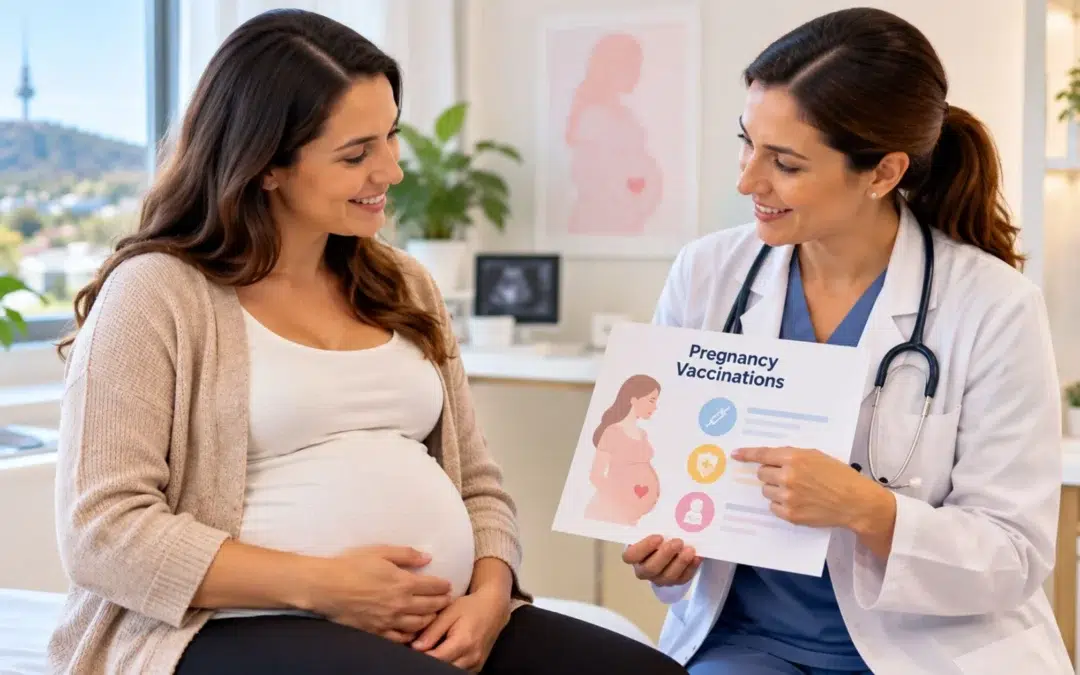
Pregnancy is an important time to review your health, including which vaccinations may help protect you and your baby. Some vaccines are routinely recommended during pregnancy, while others may be recommended before pregnancy, after birth, or only in certain circumstances.
For women looking for Pregnancy Vaccinations in Belconnen, understanding the purpose and timing of each vaccine can make pregnancy planning easier. Vaccination during pregnancy can protect the mother from certain infections and, in some cases, pass protective antibodies to the baby before birth.
In Australia, current guidance recommends vaccination against influenza during pregnancy, a pertussis-containing vaccine during each pregnancy, and RSV vaccination from 28 weeks of pregnancy. COVID-19 vaccination may also be considered depending on vaccination history and individual circumstances.
A GP can review your vaccination history, pregnancy stage, medical conditions and other factors before recommending the vaccines that are appropriate for you.
Why Are Vaccinations Important During Pregnancy?

Pregnancy Care in Belconnen
Pregnancy causes changes to the immune system and other body systems. This can increase the risk of complications from some infections.
Vaccination can provide protection to the mother and, for some diseases, help protect the baby during the first months of life.
One important benefit of maternal vaccination is the transfer of antibodies across the placenta. These antibodies can provide temporary protection to newborn babies before they are old enough to receive some of their own routine childhood vaccinations.
This is particularly relevant for infections such as pertussis and respiratory syncytial virus (RSV), which can cause serious illness in young infants.
Your vaccination needs are individual, so it is important to discuss them with your GP rather than assuming that every vaccine is suitable at every stage of pregnancy.
Which Vaccines Are Recommended During Pregnancy?
According to the Australian Immunisation Handbook, three vaccines are routinely recommended for pregnant women:
- Inactivated influenza vaccine
- Pertussis-containing vaccine, usually dTpa
- RSV vaccine, Abrysvo
The timing differs for each vaccine.
Influenza vaccination can be given at any stage of pregnancy. The pertussis-containing vaccine is recommended during each pregnancy, preferably between 20 and 32 weeks. RSV vaccination is recommended from 28 weeks, preferably between 28 and 36 weeks.
Influenza Vaccine During Pregnancy
Influenza, or flu, can cause more serious illness during pregnancy than it may in some other adults. Pregnancy is therefore one of the groups for whom influenza vaccination is particularly recommended.
The Australian Immunisation Handbook recommends one inactivated influenza vaccine dose during each pregnancy. It can be given at any stage of pregnancy.
Vaccination can help reduce the mother’s risk of severe influenza. It can also provide antibodies that cross the placenta and help protect the newborn during the first months of life.
If you received an influenza vaccine before becoming pregnant, your GP may still recommend vaccination during the pregnancy when the current seasonal vaccine becomes available.
When Can You Have the Flu Vaccine?
The influenza vaccine can be given during any trimester.
There is no need to wait until the second or third trimester simply because you are pregnant. Your GP can advise you about the current seasonal vaccine and the best timing based on your pregnancy and vaccination history.
In pregnancy, an inactivated influenza vaccine is recommended rather than a live attenuated influenza vaccine.
Pertussis Vaccine During Pregnancy
Pertussis, commonly called whooping cough, can be particularly serious for young babies.
The Australian Immunisation Handbook recommends a single dose of a pertussis-containing vaccine, such as dTpa, during every pregnancy. The preferred timing is between 20 and 32 weeks of pregnancy.
The reason vaccination is recommended during every pregnancy is that antibody levels can decrease over time. Vaccinating during each pregnancy helps provide protection to each newborn.
Maternal pertussis vaccination allows antibodies to pass from the mother to the baby through the placenta. Australian guidance states that vaccination during pregnancy reduces the risk of pertussis in young infants by around 90%.
Why Is Timing Important?
The aim is to give the vaccine during pregnancy early enough for the mother to develop antibodies and pass them to the baby before birth.
The preferred period is 20 to 32 weeks, although your GP or maternity care provider can advise you if vaccination is being considered outside this window.
Even if previous pregnancies were close together, pertussis vaccination is recommended during each pregnancy.
RSV Vaccine During Pregnancy
Respiratory syncytial virus, or RSV, is a respiratory infection that can cause serious illness in young babies.
The Australian Immunisation Handbook now recommends a single dose of Abrysvo during each pregnancy from 28 weeks, preferably between 28 and 36 weeks. Abrysvo is currently the RSV vaccine recommended for use during pregnancy in Australia.
The purpose of maternal RSV vaccination is to help protect the baby during the early months of life, when infants are particularly vulnerable to severe RSV disease.
Maternal vaccination allows antibodies to cross the placenta before birth. Australian guidance reports that maternal RSV immunisation reduces the risk of severe RSV disease in infants younger than six months by around 70%.
Can RSV Vaccination Be Given in Every Pregnancy?
Yes. Current Australian guidance recommends RSV vaccination during each pregnancy, including closely spaced pregnancies, to provide protection to each infant.
Your GP can discuss the appropriate timing based on your gestational age and expected delivery date.
What About COVID-19 Vaccination During Pregnancy?
COVID-19 vaccination recommendations can depend on your previous vaccination history and individual risk factors.
Current Australian guidance states that COVID-19 vaccination is not routinely recommended for previously vaccinated pregnant women, but it can be considered on an individual basis. Unvaccinated pregnant women are recommended to receive COVID-19 vaccination, and it can be given at any stage of pregnancy.
Because recommendations can change as evidence and vaccination programs are updated, discuss your current vaccination status with your GP rather than relying on an old vaccination schedule.
Vaccines Before Pregnancy
Some vaccines are better considered before becoming pregnant.
This is especially important for certain live vaccines, which are generally deferred during pregnancy.
For women planning pregnancy, the Australian Immunisation Handbook recommends reviewing vaccination status and considering vaccines such as measles, mumps and rubella (MMR) and varicella when appropriate before pregnancy. Women are advised not to become pregnant within 28 days of receiving live viral vaccines.
If you are planning pregnancy, a pre-pregnancy appointment with a GP is a useful opportunity to review:
- Your vaccination history
- Previous infections
- Existing medical conditions
- Current medications
- Previous pregnancies
- Travel plans
- Possible exposure risks
- Vaccines that may be needed before conception
Planning ahead can help avoid uncertainty once pregnancy begins.
Are All Vaccines Safe During Pregnancy?
Not every vaccine is routinely recommended during pregnancy.
Some vaccines are generally deferred until after delivery, particularly live vaccines, because there is insufficient evidence to establish their safety during pregnancy.
However, this does not mean every non-routine vaccine is automatically unsafe. Some vaccines may be considered during pregnancy when the potential benefits of protection outweigh the risks.
For example, hepatitis A vaccination may be considered for pregnant women who have increased risk of exposure, such as certain travellers or people with particular medical risk factors.
This is why vaccination decisions should be individualised.
If you are unsure whether a particular vaccine is appropriate, speak with your GP before receiving it.
What If You Are Travelling During Pregnancy?
Travel can affect vaccination recommendations.
Certain destinations may have higher risks of infections that are uncommon in Australia. Your travel plans, destination, length of stay and activities can all affect the advice you receive.
If you are pregnant and planning overseas travel, arrange a travel health consultation as early as possible.
Your GP can review your routine pregnancy vaccinations and discuss whether additional protection may be required.
Some vaccines may be appropriate during pregnancy in specific circumstances, while others may need to be avoided or delayed. The decision should be based on the risks of the disease and the benefits and limitations of vaccination.
Can Pregnancy Vaccines Be Given Together?
Some vaccines recommended during pregnancy can be administered during the same appointment.
The Australian Immunisation Handbook states that influenza, dTpa and RSV vaccines can be given at the same time or separately. If administered together, they should be given at different injection sites.
Your GP can help organise the timing so that important vaccinations are not unnecessarily delayed.
If you are receiving other vaccines or treatments, tell your doctor before vaccination.
What Should You Tell Your GP Before Vaccination?
Before receiving a vaccine during pregnancy, your GP may ask about your health and vaccination history.
It can be useful to tell your doctor if you:
- Have had a previous serious reaction to a vaccine
- Have allergies
- Have a medical condition affecting your immune system
- Take regular medicines
- Have received recent vaccinations
- Have previously experienced Guillain-Barré syndrome
- Are planning overseas travel
- Have questions about vaccine ingredients
- Have concerns about vaccination during pregnancy
Bring your immunisation records if you have them.
If your records are incomplete, your GP can help determine what information is available and what may be appropriate based on your circumstances.
Finding Pregnancy Vaccinations in Belconnen
If you are searching for Pregnancy Vaccinations in Belconnen, a GP appointment can be a useful starting point.
A local belconnen clinic can review your pregnancy stage and vaccination history and discuss the vaccines recommended under current Australian guidance.
This can be particularly helpful if you are unsure about the difference between vaccines recommended during pregnancy and vaccines that are better given before conception or after delivery.
Your GP can also coordinate with your midwife, obstetrician or maternity service when additional care is required.
When Should You Book a Vaccination Appointment?

Pregnancy Care in Belconnen
You do not need to wait until you have a problem before discussing vaccination.
Ideally, vaccination should be included in your pregnancy planning and antenatal care.
If you are already pregnant and have not yet discussed vaccines with your GP, it is still worth making an appointment.
Some vaccines have preferred timing during pregnancy, so discussing them early can help ensure that you do not miss the recommended window.
If you are planning pregnancy, consider having a vaccination review before conception.
Frequently Asked Questions
Q1. What vaccines are recommended during pregnancy in Australia?
Current Australian guidance routinely recommends inactivated influenza vaccination, a pertussis-containing vaccine such as dTpa, and RSV vaccination during pregnancy. The recommended timing differs for each vaccine. Your GP can assess your individual circumstances and vaccination history.
Q2. When should I have the whooping cough vaccine?
The dTpa vaccine is recommended during every pregnancy, preferably between 20 and 32 weeks of pregnancy. It helps protect the mother and allows antibodies to pass to the baby before birth.
Q3. When can I have the influenza vaccine during pregnancy?
The inactivated influenza vaccine can be given at any stage of pregnancy. Pregnant women are recommended to receive influenza vaccination during each pregnancy.
Q4. When is the RSV vaccine recommended during pregnancy?
The Australian Immunisation Handbook recommends one dose of Abrysvo from 28 weeks of pregnancy, preferably between 28 and 36 weeks. It is recommended during each pregnancy.
Q5. Can I get vaccinations before becoming pregnant?
Yes. A pre-pregnancy health appointment can include a review of your vaccination history. Some vaccines, including certain live vaccines, are better given before pregnancy. Your GP can advise you about appropriate timing.
Final Thoughts
Vaccination is an important part of pregnancy health in Australia. The right vaccines can help protect you from preventable infections and may also provide valuable protection to your baby during the early months of life.
Current Australian guidance recommends influenza vaccination during each pregnancy, dTpa vaccination during each pregnancy, and RSV vaccination from 28 weeks. COVID-19 vaccination may also be appropriate depending on your vaccination history and individual circumstances.
If you are looking for Pregnancy Vaccinations in Belconnen, speak with a GP who can review your individual situation and explain which vaccines may be suitable and when they should be given.
Book a Pregnancy Vaccination Appointment in Belconnen
Planning your pregnancy or already expecting? Book an appointment with a GP in Belconnen to review your vaccinations and discuss personalised pregnancy care for you and your baby.