As I began my practice in Belconnen more than 15 years ago, I soon discovered that as a GP in Belconnen, I had to be everything to everyone, and that’s actually quite beautiful. You’re not just a doctor treating symptoms; you’re a detective solving medical puzzles, you’re a confidant who’s listening to your patients’ deepest health fears, you’re a coordinator who makes sure everything in a patient’s healthcare journey makes sense.
This isn’t just theoretical knowledge I picked up in medical school. This is what I’ve learned from thousands of patient encounters: from the young mum who came in in the morning concerned about her toddler’s rash; it was nothing serious, but she was right to be concerned; to the 75-year-old man I’ve been seeing for the past 12 years who finally trusted me enough to tell me that he was depressed.
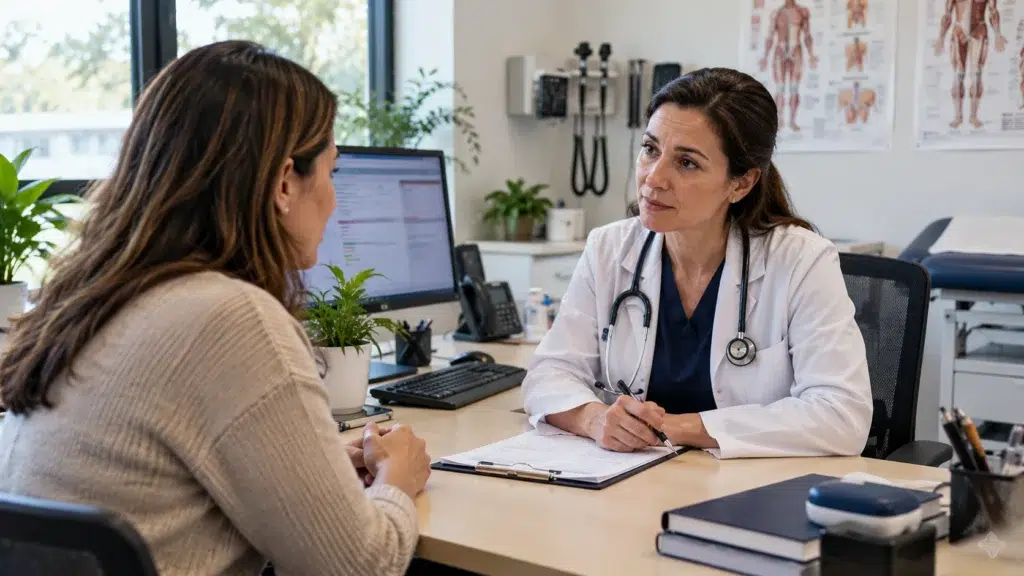
GP In Belconnen: Empathetic Doctor-Patient Consultation
What Modern Primary Healthcare Really Looks Like in Belconnen
When most people are asked what a GP does, they’ll likely say “treats colds and prescribes antibiotics. But that’s as close as it is possible to get to saying that a teacher simply gives out worksheets. The truth is much more complicated, and, dare I say, more significant.
I would guess that about 30% of my day here at my practice is dedicated to acute problems, the colds, the urinary tract infections, the twisted ankles. But the other 70%? The real work takes place there. It’s not just about giving her a prescription; it’s about understanding her diet, her work stress, her family situation, and managing her diabetes. It’s understanding why she has to check her blood sugar just before her son comes over from the other state because of anxiety. It’s knowing that she is more likely to follow her medication schedule if it is simple, as opposed to something complicated.
Prevention is my constant thought. I just recently saw a 48-year-old accountant last month who had high cholesterol and complained of headache pain. He didn’t have any of the signs and symptoms of heart disease yet. However, his father suffered from a heart attack at the age of 55. If it hadn’t been for that screening, we may have missed a true cardiovascular risk at an early stage. Now we’re not waiting years for a cardiac event to happen; we’re taking proactive measures.
The Coordinator Role That Nobody Talks About
I find it annoying when I read medical literature, because there’s a lot of attention paid to individual consultations, and not enough paid to how different parts of the healthcare system work together. However, in my experience, it is here that GPs truly save lives and avoid unnecessary suffering.
Take Tom, a patient of mine for some eight years now. He had been seen by a rheumatologist for arthritis, a cardiologist for hypertension, and a respiratory specialist for breathing problems, which he had recently begun to experience. When he arrived at me, tired and with a general sense of fatigue, none of those specialists had noticed his iron levels were dangerously low. Why? They were each focused on their own part of the puzzle. As his GP, I had the luxury of seeing the big picture.
I communicated with all 3 specialists, modified his medications to be more effective together, and suggested that he consult a dietitian. In three months, he felt like a new man. The improvement wasn’t due to any one specialist being at fault; it was due to someone seeing the whole person instead of just one body system.
Understanding the evidence of what works in prevention
I have learned something that medical books don’t really mention: People don’t change their behaviour when you tell them to do so. I have attended many training sessions on motivational interviewing and evidence-based health promotion. They all assume that patients are rational actors who are weighing costs and benefits.
In fact, I spent 20 minutes with a 52-year-old woman explaining to her the advantages of exercising for her prediabetes. Nothing happened. In a subsequent visit, I found out that her daughter had been diagnosed with type 2 diabetes at the age of 28. Suddenly, no longer was it just a matter of possibility and urgency but of personal loss. We worked together on a realistic plan; she joined a walking group of friends and began cooking differently, so she could spend less time in the kitchen. Her blood sugar level was normal after 6 months.
Prevention is not a “one size fits all” lecture. It is knowing what’s motivating your patient, what’s inhibiting them and collaborating with them on solutions that are actually viable in their life.
This book is the result of a conversation that changed my practice
In my last ten years in general practice, the biggest change in my practice has been the recognition of mental health as a disease of equal importance to physical health. Before, I used to think of them as separate domains. I now get that they’re so deeply enmeshed.
One patient, Michael, was on the list for a yearly health checkup. All his lab tests were normal, his blood pressure was good, his cholesterol was acceptable. However, there was something wrong. I asked him if he was doing okay, not just in the hospital. He broke down. He had been suffering from depression for two years, didn’t want to “bother” the mental health specialist with “minor issues”, and he was beginning to isolate himself.
The thing is, no other doctor had asked him. A cardiologist would never ask about your mental health unless it was in relation to your heart. However, your GP should always ask because depression impacts on everything, including sleep, eating, taking medication, getting better from sickness and even your immune system.
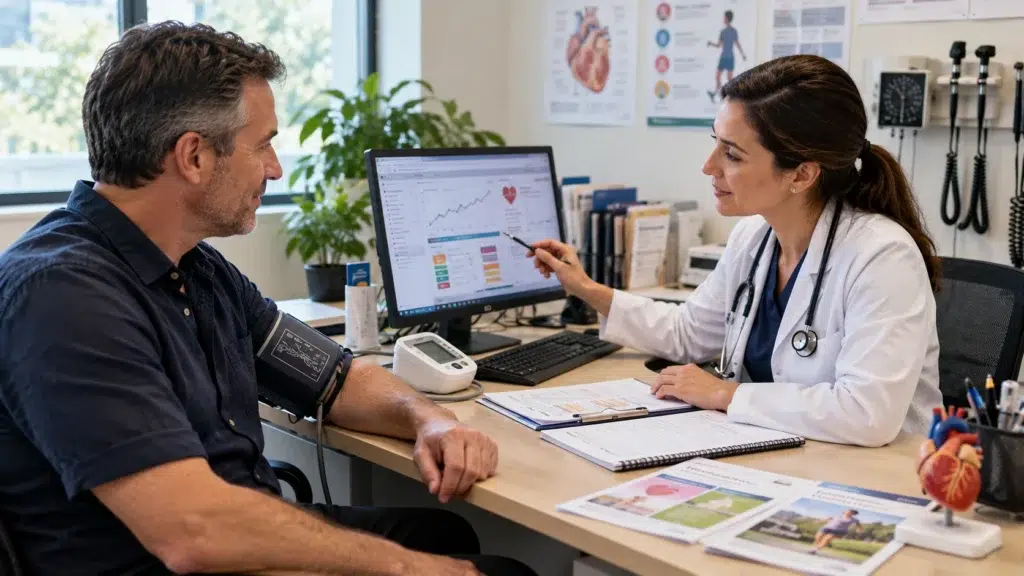
GP In Belconnen: Friendly Doctor-Patient Health Consultation
Now, screening for depression is just part of what I do. I do sometimes with therapy or antidepressants. I sometimes go to a psychologist. But I’m always checking in, I’m always making sure that someone’s mental health is in the health conversation.
Medication Management: It’s not as easy as it sounds
Many people believe that GPs prescribe drugs. But a large portion of my job is really managing medications, which is much more complicated and, really, much more important.
I had the old lady, Mrs. Patterson, who was complaining of falling and dizziness. Her specialist had prescribed an additional blood pressure medicine. She had added something for inflammation to her arthritis doctor. She had taken a sleeping pill for several years. One of her doctors was unaware of her using a herbal supplement recommended by her daughter.
I went over all of this and realized that the mix was causing her to become very dizzy. We were able to adjust and, in some cases, eliminate medications, coordinate with her specialists, and understand which medications she did need and which were “legacy” medications from several years ago. Her dizziness went away nearly instantly.
The truth is that someone who can see the big picture, understand drug interactions, and have the courage to have difficult conversations with specialists to de-prescribe, to remove medications that are no longer needed, is necessary for medication safety and optimization.
Establishing a Relationship that Matters
One of the least appreciated parts of general practice is really knowing your patients. Many of my patients have been coming to me for five, 10, even 15 years. I know the names of their kids, their stresses, their family life. If Sarah walks in and says “I’m just not myself,” I don’t need to do a lot of tests to suspect that something is wrong; I know what “herself” looks like.
This is a therapeutic relationship on its own. Patients are more likely to tell someone they trust about their true concerns. They’re more inclined to follow instructions from someone they know cares for them as a person, not just as a medical case. But the truth is, they are more likely to accept a little bit of disappointment when the test comes back a bit slower or the medicine needs to be tweaked a bit because I am really concerned about their health.
The Emotional Labor Nobody Mentions
Part of general practice that is not discussed enough, in my opinion, is the emotional work we do. We’re not just medical technicians. We’re counselors, educators, sometimes social workers, sometimes the person who has to deliver bad news.
A few weeks ago I was asked to inform a 42-year-old father that he had prostate cancer. We’d caught it early, which is good, but it was still devastating news. I spent almost an hour with him, talking him through what it was, what his choices were, what he was afraid of, about death and manhood. His wife came in during the last part of the consultation. Both of their faces were full of fear.
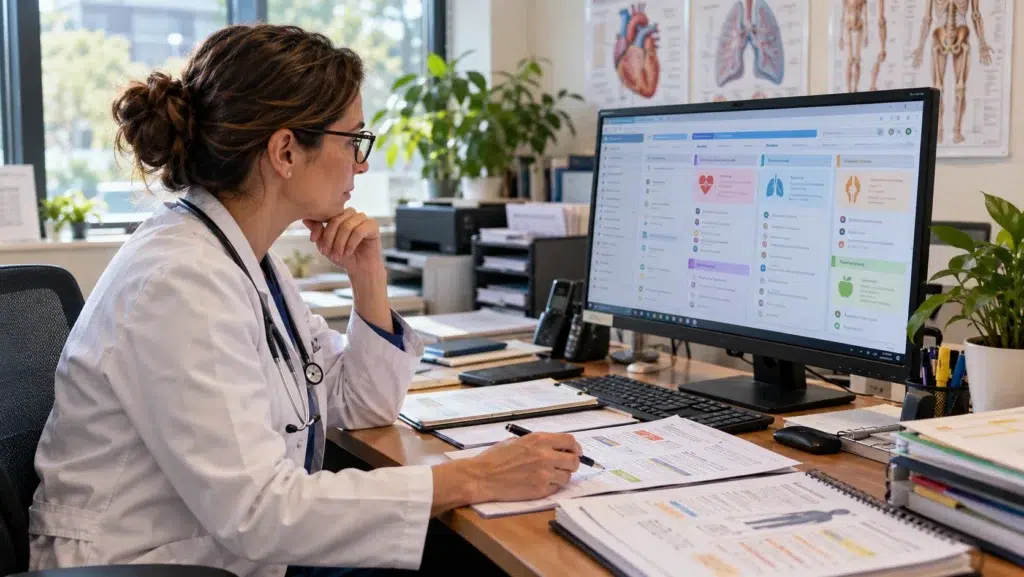
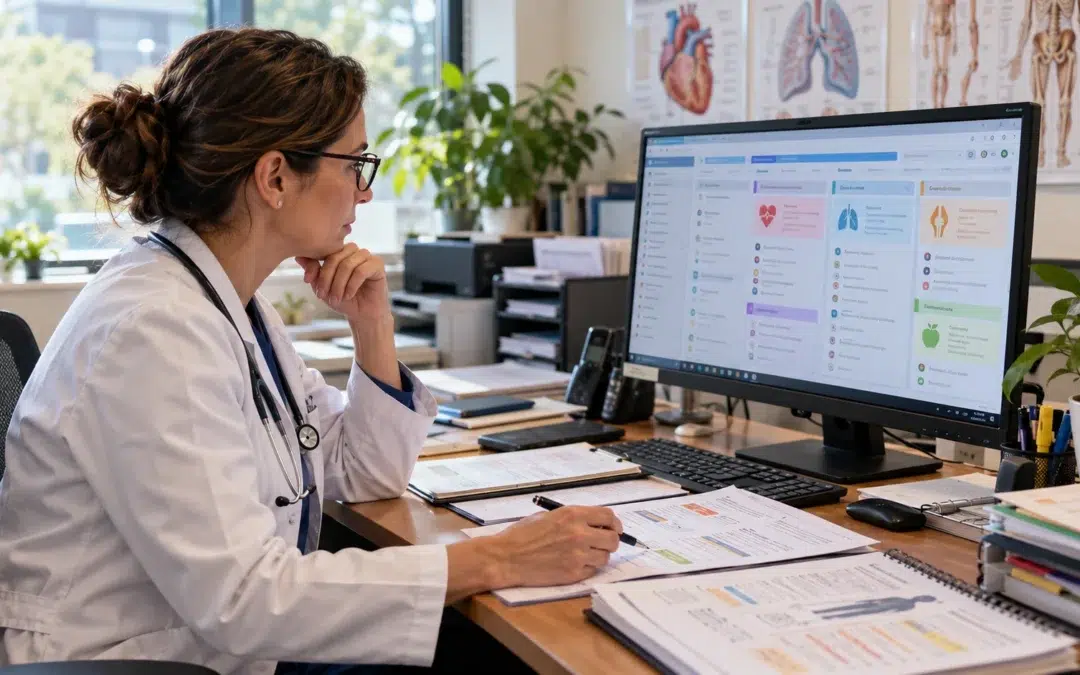
GP In Belconnen: Thoughtful Doctor Reviewing Medical Dashboard
That’s general practice. Yes, there are medical decisions involved. There is also a real person-to-person connection, empathy and the duty to be a trusted advisor during the scary times.
The importance of General Practice or GP in Belconnen
Belconnen is a vibrant and diverse community of young families, older citizens, new immigrants, workers from all walks of life, and more. It’s not just a standard GP here. It is responsive, personal and is very community-based.
I remember seeing patients at the supermarket, and they feel comfortable coming up to me and asking me health questions, or a former patient coming up to me and thanking me for catching their cholesterol problem five years ago, and so on and so forth; that’s why I chose this specialty. General practice is preventive medicine on a large scale. It is being interested in people’s lives and helping them lead a better, longer, and healthier life with medical knowledge.
The GP’s job in Belconnen (any community, for that matter) is to provide a medical home. A location where an individual can go with any health concern and be listened to, assessed in-depth, and connected with other experts as necessary. It’s complicated, sometimes challenging, often very fulfilling work. Visit Belconnen General Practice!
Come to think of it, I wouldn’t do anything else!
FAQs
- If I’m healthy, how often should I see my GP?
Even if you don’t feel unwell, I would suggest that you visit your GP at least once a year for a health check. Your opportunity to talk about screening that’s right for your age, such as blood pressure checks, cholesterol screening, cancer screening, and mental health assessment. You may need more frequent visits if you have risk factors (such as a family history of heart disease). It’s like taking care of your car, if you take care of it, it won’t break down.
- Is a referral needed to see a specialist?
Most specialists in the Australian healthcare system would like to see a GP referral, and some private insurance plans might even need a GP referral for rebates. However, most importantly, your GP should be part of specialist care coordination. I frequently talk with specialists about your case and make sure everyone is on the same page and that there are no conflicting medications. This is a good thing to coordinate.
- Do I need to go to the ER or GP for this issue?
If it’s life-threatening (chest pain, severe difficulty breathing, loss of consciousness), go to the ER; this is a good rule of thumb. Consider urgent care or an after-hours GP if it is urgent but not immediately dangerous (severe but not debilitating pain, significant injury). If it is something you have been suffering for days or weeks, make a regular GP appointment. Things can be diagnosed and treated faster and more cost-effectively than in the ED.
- Will my GP be able to assist me with mental health problems?
Absolutely. A lot of people are not aware that GPs provide a considerable amount of mental health care within the community. Diagnosis and treatment of depression and anxiety, referral to psychologists, antidepressant drugs and continuous support. A GP is often the more convenient first port of call than waiting months for specialist mental health services. However, specialist referral may be appropriate for complex mental health problems.
- Why does my GP ask me about things which don’t seem to be related to my problem?
They are likely to be related, even if it is not apparent. If you are coming in with headaches, I am asking about stress, sleep, diet and work, as these are all factors that can contribute to headaches. Your GP isn’t just treating symptoms; we’re looking at your life and how it impacts your health. But sometimes, the answer is not a pill; it’s a solution to the problem.