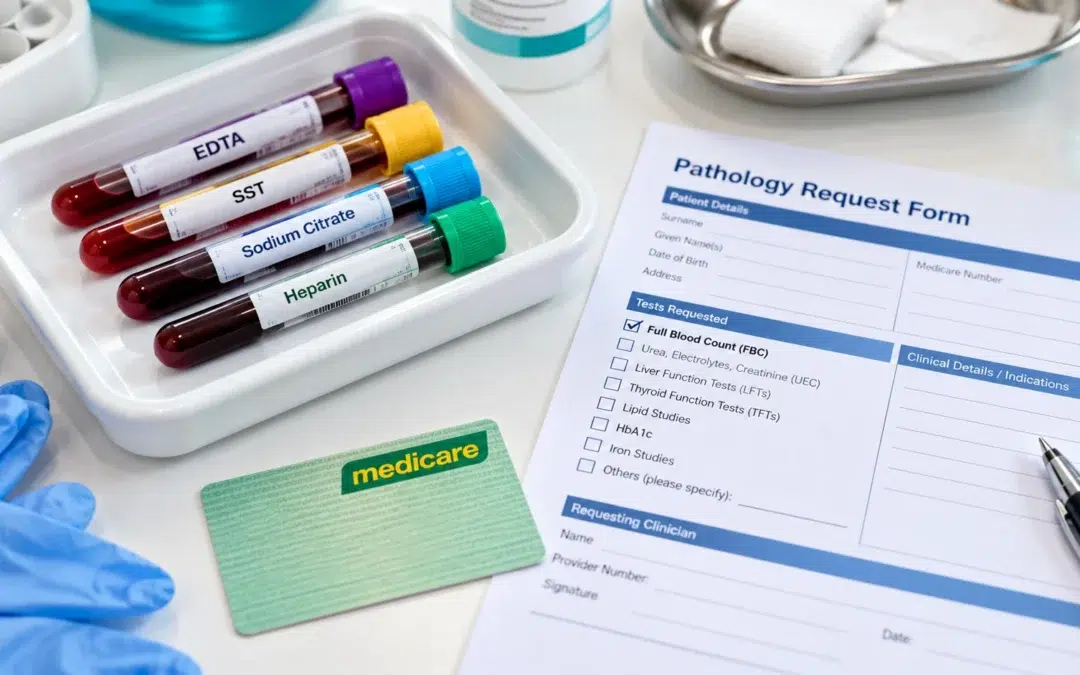
There is a high likelihood that if you have ever had a blood test, a full blood count was included. It is one of the most commonly requested tests in general practice and for a very good reason. It’s easy to get, widely available, and provides a general overview of the cells that transport oxygen, resist infection, and help blood clot. Despite this, many patients are given a printout that is titled FBC or CBC, and they wonder what they are viewing.
This guide will explain what an FBC measures, why your General Practitioner might have ordered an FBC, how the results are interpreted in context, and what an FBC can’t tell you. We aim to make the blood test report less mysterious, so you can have a more confident conversation with your doctor.

Full Blood Count Measures
A Full Blood Count (FBC) is a test that checks the levels of various blood components.
An FBC examines the three types of blood cells that are present in your blood. They each have a different role to play:
- Red blood cells transport oxygen to the rest of your body.
- The protein in red cells that binds oxygen is haemoglobin. It is the most commonly referred to value when talking about anaemia.
- The percentage of red cells in your blood is called haematocrit.
- White blood cells are a component of your immune system that helps your body fight infection and inflammation. These are frequently subdivided in the report.
- Platelets are small pieces of cells that aid in the clotting of blood when a vessel is damaged.
The lab also provides red cell indices, which include the average size and haemoglobin content of each red cell. These measurements are helpful indicators. For instance, small red cells may guide your GP to other causes of anaemia than large red cells.
Why Your GP Might Order an FBC
The majority of FBCs are requested to investigate a symptom. Your GP may want to order one if you have:

Full Blood Count Measures
- Ongoing tiredness or weakness that hasn’t settled
- Repeated infections, or a fever that will not go away.
- Any bruising or bleeding of the gums or bleeding after minor cuts that lasts for more than 10 minutes
- Pale skin, difficulty breathing with activity, or dizziness
- The need for medication monitoring which affects blood cells.
- A preliminary finding that requires further confirmation.
Many health checks include an FBC as well, and it is a good initial test if a symptom has no apparent cause.
The Way the Main Results Are Read
An FBC is not one single number; it is a set of findings, and we read an FBC as a set of findings.
The haemoglobin and Red Cells data are currently unavailable.
Low haemoglobin or red cell count may indicate anaemia. Several possible causes exist, such as iron deficiency, blood loss, and certain chronic conditions. The size and colour indices help to narrow down the search. Your GP may then request iron blood tests or other tests to confirm the cause.
White Blood Cells
An increase in white cells may occur in the event of infection or inflammation. They can also change due to stress, smoking, pregnancy, and certain medications. If a persistent change occurs in one type of white cell, further evaluation is warranted. We always look at white cell results in conjunction with your symptoms and history, as causes are so diverse.
Platelets
Platelets are used to stop bleeding. Low counts may lead to bruising, and high counts are usually temporary and associated with inflammation or recovery from illness. There must be context before any decision is made in both directions.
Reference Ranges Vary
Reference ranges vary from one laboratory to another and may vary slightly. Never compare your results with a range found on the web, but with the range given on your own report.
What an FBC Cannot Tell You
There are limits to an FBC, and you should be aware of them:
Full Blood Count Measures
- It cannot make a definite diagnosis by itself.
- It does not measure iron stores directly, and that is why ferritin is often tested separately.
- It is not a test of the function of your liver or kidneys.
- The results may vary from day to day, especially when sick.
Planning Your FBC
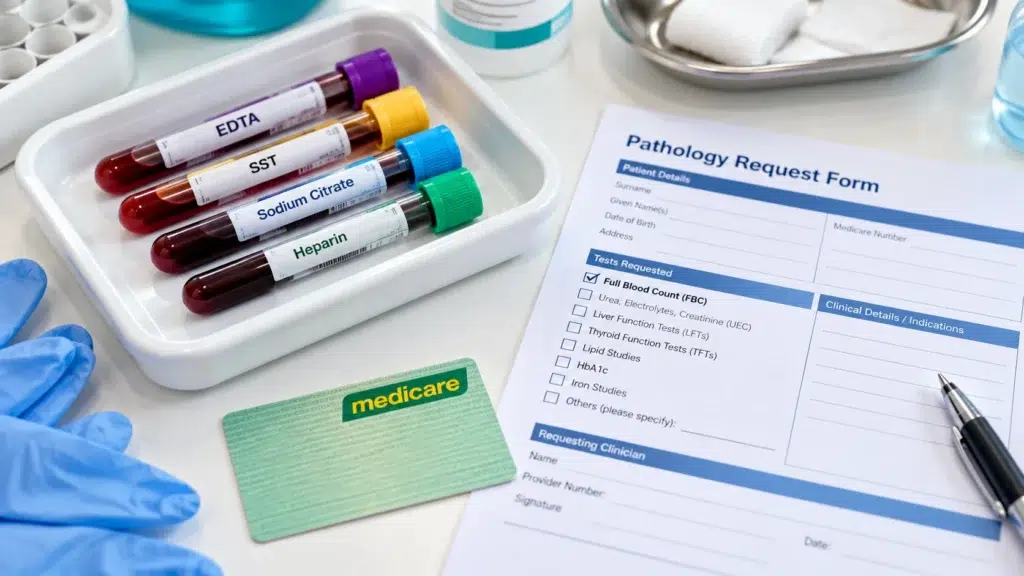
Preparation is simple. There is no need to fast, but if your GP says otherwise, do so. Water, Medicare card and pathology request form and let staff know of any medicines used. If you have any questions, call the practice prior to your appointment. It’s a smart way to take care of yourself to ask questions.
FAQs
Is an FBC a Cholesterol Test?
No. An FBC looks at blood cells, and a cholesterol test, often referred to as a lipid profile, measures fats. Your GP might ask for both tests in the same appointment. Fasting is typically required for a cholesterol test, but not for an FBC.
When Should I Have a Full Blood Count?
This will depend on your health, symptoms and medications. Some medicines need to be monitored regularly, and the doctor who prescribed the medicine will tell you how often. FBCs are not routinely ordered in healthy adults unless they are advised to do so by their GP. Your GP will be able to give you guidance on the best time for you.
Is Cancer Detectable by an FBC?
An FBC is not sufficient to diagnose cancer. A few blood changes may lead to further tests, including a referral for blood disorders. The majority of abnormal test results have common, non-serious causes, including infection or iron deficiency. Your GP will determine if further tests are necessary and will discuss this with you.
What Does FBC Borderline Mean?
Borderline – a value is close to the reference range. Single borderline results are not uncommon and frequently change with repeat testing. Results may vary based on hydration, recent illness, exercise, and time of day. Your GP will consider the test pattern and your symptoms before deciding whether another test is needed.
I Need a Referral to Get an FBC?
Usually, yes. Medicare usually covers pathology tests when a doctor orders them. Medicare does not cover some private providers that offer tests without a referral, and these may be more expensive. When in doubt, consult with your GP first. They can tell you what your cover could contain and the choices you have.
How to Get in Touch With Belconnen General Practice?
If you have not received a result yet, or you want to discuss a report, our team at Belconnen General Practice is here to help:
- Phone: 02 6278 3488
- Fax: 02 6278 3533
- Address: Unit 12, 1 Grazier Lane, Belconnen ACT 2617
- Online: Book an appointment