
Workplace health is really the bedrock of productive, engaged teams and successful businesses. So, whether you’re an employee just starting out in a new job, coming back to work after an injury, or an employer focused on compliance and keeping your workforce safe, occupational medicals and workplace health services here in Belconnen offer crucial medical assessments and support. This guide will walk you through everything employees and employers should know about occupational health services, employment medicals, and why taking a proactive stance on workplace health is a win-win for everyone involved.
What Are Occupational Medicals?
Occupational medicals, also known as employment medicals or pre-employment medical assessments, are specialized medical evaluations tailored to meet specific workplace requirements. These assessments differ from routine general practice appointments in that they concentrate on an individual’s fitness and capability for work.
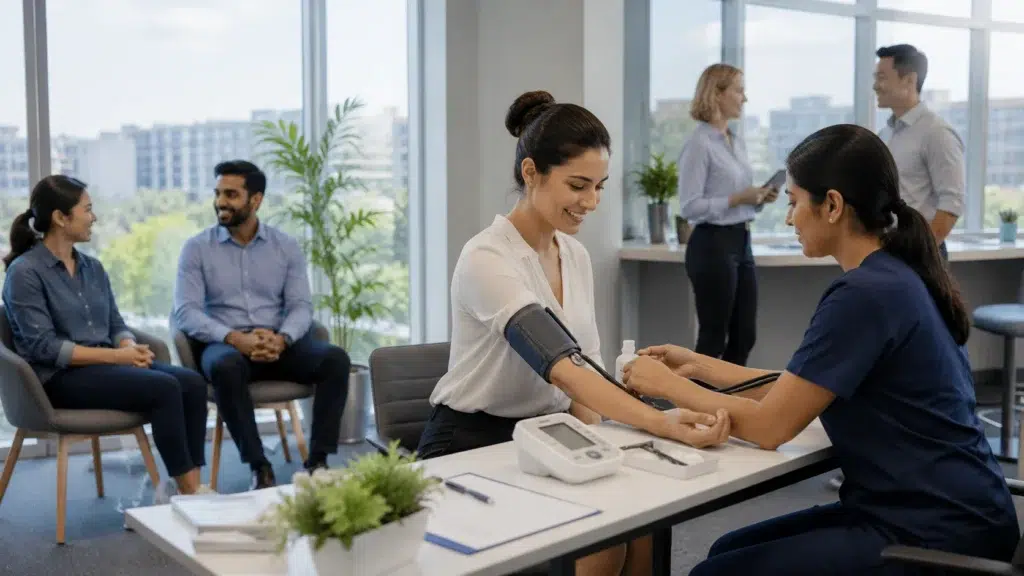
Healthcare professional conducting workplace health assessments for employees in a Belconnen office.
Key Purposes of Occupational Medicals
Occupational medicals serve multiple critical functions:
- Pre-employment screening – Assessing whether candidates are fit for specific roles
- Fitness-to-work assessments – Determining if employees can safely return after illness or injury
- Baseline health establishment – Creating a health benchmark for comparison if future work-related injuries occur
- Compliance and legal protection – Ensuring organisations meet regulatory requirements
- Risk identification – Identifying health risks associated with specific job tasks
- Reasonable adjustments planning – Supporting employees with health conditions or disabilities
Workplace Health Services: What’s Included?
Comprehensive workplace health services extend beyond simple medical checks. Modern occupational health providers offer integrated support across multiple areas.
Pre-Employment Medical Assessments
When hiring new staff, employers benefit from baseline health assessments that:
- Verify fitness for role – Ensure candidates can safely perform essential job functions
- Identify accommodation needs – Recognise if reasonable adjustments could support the candidate’s performance
- Reduce turnover – Help match employees to roles they can sustain long-term
- Protect workforce safety – Ensure colleagues aren’t put at risk
- Document compliance – Provide records demonstrating fair hiring practices
Your GP in Belconnen can provide thorough pre-employment assessments tailored to your industry’s specific requirements.
Return-to-Work Programs
When employees take medical leave due to illness or injury, structured return-to-work support accelerates recovery and reduces reinjury risk:
- Graduated return plans – Phased increases in hours and responsibilities
- Ergonomic assessment – Workplace modifications to prevent reinjury
- Fitness verification – Medical clearance before return to full duties
- Ongoing monitoring – Regular check-ins during the return-to-work period
Health Surveillance
Some roles require ongoing health monitoring due to occupational hazards:
- Noise exposure monitoring – Hearing assessments for employees in loud environments
- Chemical exposure – Regular health checks for workers handling hazardous substances
- Respiratory monitoring – For roles involving dust, fumes, or respiratory hazards
- Manual handling roles – Ongoing back and musculoskeletal health assessment
Mental Health and Wellbeing Support
Workplace stress, burnout, and mental health challenges significantly impact productivity and employee retention:
- Mental health screening – Confidential assessment of stress, anxiety, and depression
- Wellness programs – Proactive mental health initiatives and resilience training
- Counselling referrals – Access to professional mental health support
- Workplace accommodation – Supporting employees managing mental health conditions
Occupational Health Management
Proactive management of work-related health issues prevents problems from escalating:
- Work injury assessment – Immediate evaluation of workplace injuries
- Cumulative strain injury – Assessment and prevention of repetitive strain conditions
- Ergonomic consultation – Workplace environment optimisation
- Preventive strategies – Identifying and addressing risks before injuries occur
Pre-Employment Medical Assessment Process
Understanding what’s involved in a work medical assessment helps candidates and employers prepare effectively.

Employees participating in a workplace wellness program promoting health and wellbeing in Belconnen.
Information Gathering
Your healthcare provider will collect:
- Detailed medical history – Previous illnesses, surgeries, medications, allergies
- Occupational history – Previous roles and any work-related health issues
- Current health status – Existing conditions and how they’re managed
- Job description details – Specific tasks, hazards, and physical requirements
Clinical Examination
The medical assessment includes:
- General health examination – Blood pressure, heart rate, basic health check
- Vision and hearing – Testing if relevant to the role
- Musculoskeletal assessment – Strength, range of movement, ability to perform job tasks
- Respiratory function – Lung capacity assessment if relevant
- Drug screening – Depending on role (safety-sensitive positions)
Specialist Testing
Depending on the role, additional testing may include:
- Lung function tests – For roles with respiratory hazards
- Audiometry – Hearing assessment for noise-exposed roles
- Colour vision testing – For safety-critical roles like driving
- Fitness assessments – Physical capability evaluation
- Blood tests – Baseline health markers or specific requirements
Report and Recommendations
Your GP provides a detailed report including:
- Fitness determination – Whether fit for the role (unconditional, conditional, or unfit)
- Identified risks – Any health concerns relevant to the position
- Recommended adjustments – Workplace modifications that could support the employee
- Ongoing monitoring needs – Any follow-up assessments required
- Confidential feedback – Private discussion with the employee about their health
Occupational Health Services for Different Industries
Different industries come with their own specific occupational health needs. Workplace health services in Belconnen ought to take these industry-specific requirements into account.
Construction and Manual Labour
- Assessing risks associated with heavy lifting and repetitive strain.
- Implementing fall prevention measures and safety protocols.
- Monitoring exposure to chemicals.
- Providing manual handling training and ensuring physical fitness.
Healthcare and Aged Care
- Assessing the risks of bloodborne pathogens.
- Evaluating manual handling techniques and physical strain.
- Implementing infection control measures and screening for immunity.
- Focusing on mental health and preventing burnout.
Transportation and Logistics
- Conducting vision and colour vision tests.
- Performing hearing assessments.
- Evaluating reaction time and cognitive function.
- Implementing drug and alcohol screening protocols.
Office and Professional Services
- Assessing workstations for ergonomics.
- Providing support for mental health and stress management.
- Preventing postural strain.
- Addressing the risks associated with sedentary behaviour.
Manufacturing and Hazardous Materials
- Conducting respiratory and lung function tests.
- Performing skin health assessments.
- Establishing hearing protection protocols.
- Monitoring exposure to hazardous substances.
Return-to-Work Strategies and Best Practice
Effective return-to-work programs benefit both employees and organisations.
Medical Clearance
Before returning, employees should have:
- Medical assessment – Confirmation they’re medically fit for duties
- Functional capacity evaluation – Assessment of their ability to perform specific job tasks
- Any necessary adjustments – Workplace modifications documented and implemented
- Graduated plan – If returning from serious illness or injury
Workplace Adjustments
Common adjustments supporting successful return-to-work include:
- Modified hours – Reduced hours initially, increasing as capacity improves
- Job modification – Temporary changes to duties or responsibilities
- Equipment provision – Ergonomic equipment or mobility aids
- Environmental changes – Lighting, temperature, or noise adjustments
- Supervision changes – Additional support during transition period
Employee Support
Returning to work after health challenges can feel daunting:
- Clear communication – Understanding what return-to-work expectations are
- Peer support – Connection with colleagues and team reintegration
- Ongoing health management – Access to physiotherapy, counselling, or other supports
- Regular review – Checking in on how return-to-work is progressing
Employer Responsibilities
Employers play a crucial role in successful return-to-work:
- Reasonable adjustments – Implementing necessary workplace modifications
- Non-discrimination – Ensuring returning employees aren’t penalised
- Communication – Clear, supportive messaging about return-to-work plans
- Follow-up occupational health – Regular check-ins and ongoing support
Mental Health in the Workplace
Mental health is increasingly recognised as central to occupational health.
Workplace Stress Assessment
Your occupational health provider can:
- Screen for burnout – Identify stress levels and burnout risk
- Assess mental health – Evaluate anxiety, depression, and psychological wellbeing
- Identify workplace factors – Determine if work itself is contributing to mental health challenges
- Recommend interventions – Workplace changes, counselling, or treatment
Building Resilient Workplaces
Proactive mental health strategies include:
- Wellbeing programs – Fitness, mindfulness, or stress management initiatives
- Mental health training – Manager training on recognising and supporting mental health
- Peer support networks – Creating safe spaces for employees to discuss challenges
- Access to counselling – Employee Assistance Programs or counselling referrals
- Culture change – Reducing stigma around mental health discussions
Compliance and Regulatory Requirements
Different roles and industries have specific occupational health requirements.
Legal Framework
In Australia, occupational health is governed by:
- Work Health and Safety Act 2011 – Federal legislation requiring employers to manage workplace hazards
- State-specific regulations – Additional requirements varying by state
- Industry standards – Specific requirements for high-risk industries
- Disability Discrimination Act – Requiring reasonable adjustments for employees with disabilities
Documentation and Record-Keeping
Proper documentation ensures compliance and protects both parties:
- Medical records – Secure, confidential storage of occupational health assessments
- Return-to-work plans – Documented agreements about graduated return schedules
- Adjustment records – Documentation of workplace modifications implemented
- Ongoing monitoring – Records of health surveillance activities
The Role of Your GP in Occupational Health
Your GP in Belconnen is ideally positioned to provide occupational health services because they:
- Know your full medical history – Providing context for occupational health recommendations
- Understand local context – Familiarity with Belconnen’s industries and businesses
- Provide continuity of care – Ongoing relationship extending beyond single assessments
- Coordinate other care – Referral to specialists or allied health if needed
- Offer accessible care – Local appointments without needing external occupational health agencies
Preparing for Your Occupational Medical Assessment
Whether you’re an employee or employer, preparation ensures an effective assessment.
For Employees
- Bring documentation – Previous medical records, medication lists, specialist letters
- Wear appropriate clothing – Allowing examination of relevant body areas
- Bring the job description – Detailed information about role requirements
- List your questions – Any concerns about fitness for the role
- Be honest – Accurate information ensures appropriate recommendations
For Employers
- Provide comprehensive job descriptions – Including physical demands and hazards
- Clarify role requirements – Being specific about essential vs. desirable functions
- Communicate with GP – Discussing any specific concerns or requirements
- Plan timing – Allowing adequate time for thorough assessment before role start
Common Myths About Occupational Medicals
Myth: Occupational Medicals Are Just to Exclude People
Reality: Occupational medicals aim to match people to suitable roles and identify reasonable adjustments that enable successful employment.
Myth: Minor Health Issues Automatically Mean Unfitness
Reality: Most health conditions can be managed in the workplace with appropriate support and adjustments.
Myth: Occupational Medicals Are One-Off Events
Reality: Many roles require ongoing health monitoring and regular reassessment as circumstances change.
Whether you’re an employee needing pre-employment medical clearance, returning to work after health issues, or an employer aiming to create a healthier, more productive workplace, occupational health services in Belconnen are a crucial investment for both long-term well-being and business success.
Reach out to Belconnen General Practice today to talk about your workplace health requirements. Our skilled practitioners offer thorough employment medicals, return-to-work assessments, and continuous occupational health support, all customized to your specific industry and situation.
Schedule your occupational health assessment now to help build safer, healthier, and more productive workplaces.
FAQs
Q: What exactly happens during an occupational medical assessment?
A: An occupational medical (also called an employment medical or work medical assessment) is a specialised health assessment designed specifically to evaluate your fitness for a particular job. It’s quite different from a standard GP visit, so understanding what to expect helps you prepare effectively.
Q: Can I be rejected for a job because of a medical condition discovered during an occupational medical?
A: This is a common concern, and it’s important to understand both your rights and the legitimate considerations involved.
Q: What’s the difference between pre-employment and return-to-work medicals?
A: While both are occupational medical assessments, pre-employment and return-to-work medicals serve different purposes and may emphasise different aspects of your health.
Q: How do workplace adjustments work, and who pays for them?
A: Reasonable workplace adjustments identified through occupational health assessments are changes to the work environment, tasks, or scheduling that allow employees to work safely and effectively despite health conditions or disabilities.
Q: Is drug testing part of occupational medicals, and what are my rights?
A: Drug testing is part of occupational medicals for some roles but not others. Understanding when it’s appropriate, your rights around testing, and what happens with results is important.