
You want to make the best health decisions for your child as a parent/caregiver. Childhood immunizations are among those decisions. You may have questions regarding the need for vaccinations, what they are protecting against, or what you can expect at vaccination appointments. This guide is intended to provide you with clear, simple information about routine childhood immunisation in Belconnen, ACT, Australia.
Immunisation of children is one of the most powerful public health interventions. It is meant to prevent children from getting seriously sick or dying from potentially serious diseases before they come in contact with them in the community. Knowing the facts about vaccines and their effects can help you feel confident about this crucial aspect of your child’s health care.
Childhood Immunisation Belconnen
Childhood Immunisation is what?
Immunisation (or vaccination) helps your child’s immune system learn how to recognise and defend against dangerous diseases. A vaccine is a small, harmless dose of material from a germ that causes a disease, such as a weakened germ, dead germ, or instructions for making a protein that the germ contains.
By getting a vaccine, your child’s immune system learns to recognize this disease without having to experience its symptoms. If your child develops the disease later in life, his/her immune system recognizes it and reacts quickly, sometimes before symptoms even occur.
This immunity is known as immunity. Most childhood vaccines provide long-lasting immunity, sometimes for a lifetime. Some vaccines need boosters at specific ages to boost immunity.
Immunisation is not a substitute for infection. Your child doesn’t catch the disease from the vaccine. Rather, they develop protection without the dangers of the actual disease.
Why Are Routine Childhood Vaccinations Important?
Vaccines are not just about individual kids; they are about communities. Once common diseases that claimed the lives or impaired the health of thousands of Australian children are now rare due to immunisation.
If a large enough proportion of the community is immunised against a disease, the spread of the disease slows. In some cases, it ceases to spread completely. This is referred to as community immunity or “herd immunity.” It’s particularly important to protect infants who are too young to be vaccinated and individuals with immune system deficiencies who cannot receive some vaccines.
Vaccine-preventable diseases are not to be taken lightly. Measles may lead to inflammation of the brain. Whooping cough can cause a baby to stop breathing. Polio can result in permanent paralysis. These are not minor illnesses; they can be life-threatening, especially for little ones and babies.
These diseases used to be a regular occurrence in childhood prior to the advent of vaccines. Families had to send their children to their deaths from preventable diseases. A modern parent in a country that has a good vaccination program may not have experienced a case of measles, polio or diphtheria, but this is because previous generations had been vaccinated.
Routine childhood immunisations are based on decades of research and experience. The schedule is designed to protect children at the ages when they’re most vulnerable to serious disease.
How the Australian Childhood Immunisation Schedule Works
Australia has a national immunisation schedule for childhood immunisation. Vaccinations are recommended at certain ages as it is believed these are the most effective times for vaccination.
The first vaccinations are given to babies at 6 weeks of age. This may appear very young, but immunisation can be given at this age to newborns. Schedules involve early childhood vaccinations at regular intervals and then booster shots at school age.
The schedule prevents numerous diseases, such as measles, mumps, rubella, whooping cough, diphtheria, tetanus, polio, pneumococcal disease, rotavirus and hepatitis B. These vaccines are administered in a series instead of all at once, in part to ensure that your child’s immune system is able to react appropriately and in part to minimize the number of shots at one time.
Note: Vaccination timetables may change with the development of new vaccines and changes in medical knowledge. Your GP will have up-to-date information about what is recommended and when before your child’s vaccinations. If you have any questions about the programme or your child, please consult your GP at Belconnen General Practice. They can give advice according to your child’s age, health, and the most up-to-date Australian health advice.
What Parents Can Expect During a Vaccination Appointment
Vaccination appointments are typically simple. Once you arrive, you will be asked to verify your child’s information and immunizations by the reception staff. Then, a nurse or GP will discuss your child’s health with you before administering the vaccine.

Childhood Immunisation Canberra
This is your chance to ask questions or discuss any concerns. Inform your child’s health care provider if your child:
- Previously had a serious allergic reaction to a vaccine
- Has a weakened immune system
- Is feeling sick and has a fever
- Has had any recent medications or treatments
- Has experienced vaccine reactions in the past
Your health care provider will answer your questions truthfully and explain if it is appropriate for your child to get vaccinated at this time. The appointment may be postponed if your child is extremely ill.
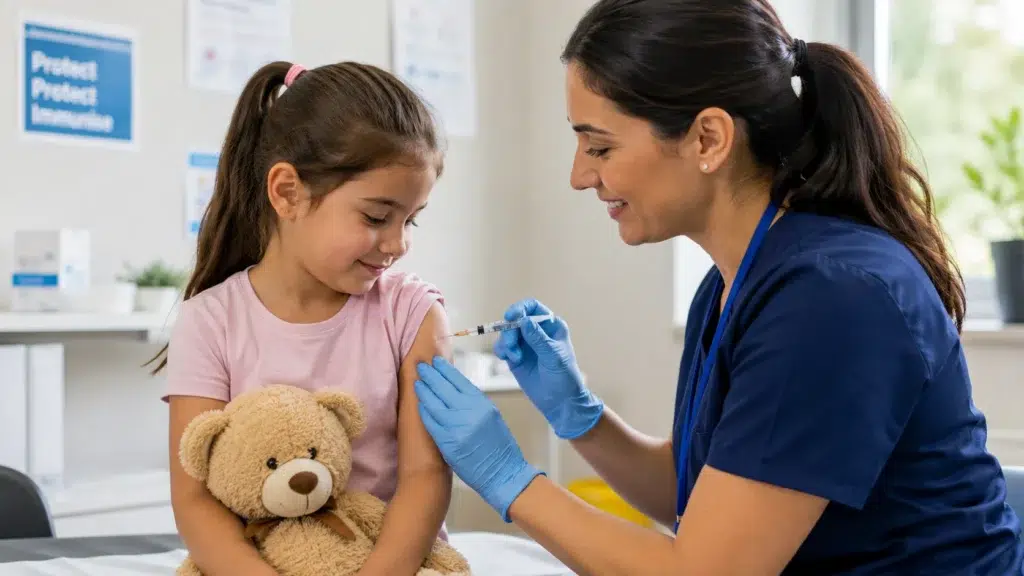
The actual vaccination takes only a few minutes. The majority of childhood vaccines are injected. Your child may feel a slight pinch, and some children may cry. This is normal, and there is no problem.
You will typically remain in the office for about 15 minutes after the vaccination for any immediate reaction. Inquire about your child’s next immunization before you depart and if it is necessary to make an appointment.
Store your child’s immunisation record safely. It will be required for childcare, kindergarten and school registration. Your GP’s practice will also keep records but it helps to have your own copy.
After Vaccination, What Parents Can Expect
The side effects are usually mild or none at all in most children. It is normal for someone to get a sore arm at the spot where the injection was given. Some kids have a slight fever or are a little fussy for a day or two.
Your child’s immune system is reacting to the vaccine and that is a good thing, as these are mild reactions. They usually settle within a day or two and don’t need treatment.
Paracetamol or ibuprofen may be given if your child is uncomfortable or has a fever. Follow the dose directions on the package for your child by his/her age and weight. Some parents find it helps to give the dose just after vaccination, but this isn’t essential.
Serious vaccine reactions are very uncommon. If the reaction is serious, it may be indicated by difficulty breathing, severe swelling or collapse. If this happens, seek immediate medical help by calling your GP or going to the nearest emergency department.
Minor reactions, such as a slight fever or arm pain, should not prevent further immunizations. Any concerns should be discussed with your healthcare provider prior to the next dose.
Common Questions Parents Ask
Can a child be safely vaccinated if he/she appears to be ill?
Minor illnesses like a cold or mild fever don’t usually prevent vaccination. If your child is very unwell, though, or has a high temperature, it is OK to reschedule. Your GP will be able to give you advice on when the ideal time is for your child’s situation.
If my child is not up to date on immunizations, what should I do?
Vaccinations can be made up at any time. Your child will NOT have to begin the schedule over again. Your GP will be able to give you guidance on a suitable catch-up programme for your child’s age.
Is there any child who should not be immunized?
The majority of children are safe to be immunized. Exceptions are uncommon and may occur in a child with severe allergies to vaccine ingredients or in children with certain serious immune system diseases. Your GP will talk to you about your child’s personal situation.
If my child has a bad reaction to a vaccine, what will happen?
Very few serious reactions are reported. If your child has an actual serious reaction to a vaccination, your GP will take the time to discuss this with you before giving further vaccinations. At times, an alternative vaccine may be given or the vaccine schedule may be modified.
May I administer my child’s immunizations at my practice?
Yes. Vaccinations can be administered by GPs, specialist immunisation clinics and some pharmacies. The vaccines are the same regardless of where they’re given. Pick anywhere that your family is at ease.
Key Understanding: Myths and Misconceptions about Childhood Immunization

Childhood Immunisation Australia
Vaccines are harmful chemicals.
There are a number of ingredients in vaccines, but they’re in small, safe quantities. Ingredients have specific functions, such as making the vaccine more effective or protecting the vaccine. Careful monitoring of the safety of vaccine ingredients. If you’re worried about specific ingredients, you can talk to your GP about them.
Natural immunity to catch the disease is better than vaccine immunity.
Being infected does provide immunity, but at a very high price. Your child has to suffer through a serious illness with risk of complications or death. Vaccine immunity is protection with no such risks. If immunity is desired, vaccination is the safer route to take.
“Vaccines cause autism.”
This has been extensively studied in several large-scale studies. There is no link between vaccines and autism. This link was originally discovered in a retracted study that was found to be fraudulent.
Vaccines make you more vulnerable to disease.
Vaccines are actually designed to boost the immune system by educating it on specific diseases. Immunity is built by your child’s immune system when it faces challenges. Vaccination is an effective method to do so without causing harm to the child.
Giving vaccines at different times will decrease the chance of side effects.
The side effects of vaccination are not reduced if vaccinations are spread out. It exposes your child to being unguarded for longer. Protection is achieved at the ages when children need it most with the recommended schedule.
When is the Right Time for Parents to Speak With a GP?
If you have any concerns, discuss vaccination with your GP:
- You are concerned about your child’s health or ability to get vaccines
- You don’t know if your child has been up-to-date on vaccinations
- Your child has previously had a reaction to a vaccine
- Your child has an ongoing condition or disease that affects their immune system
- You have heard something on the internet that has made you concerned about vaccines
- There are questions regarding individual vaccines or the vaccine schedule
- You have an allergic reaction to a vaccine and want to talk to your child’s doctor about safety concerns
Your GP can talk about vaccinations and is qualified to discuss any health concerns you may have regarding your child’s vaccination. They can provide up-to-date information and communicate in a manner that is understandable to your family.
No question is a silly question when it comes to your child’s health! If you have something you are concerned about, discuss it at your appointment.
What Vaccination Records to Keep?
Maintain a copy of your child’s immunisation record. This should show:
- The date each vaccine was given
- The vaccine name
- The dose number
- Any reaction (even mild reactions)
- Where the vaccine was given
This will be required for childcare, kindy and school registration. It’s also helpful when seeing the doctor. Your GP has records as well, but this will ensure you never miss out on important information.
When changing GP, request your GP to transfer records to your new GP. Your new GP can access immunisation registers or provide catch-up immunisations if records are unavailable.
Helping Your Child with Vaccination
Vaccinations are generally well tolerated by most children. A few things that will help:
- Remember, children become aware of parents’ anxiety
- Be honest about what will happen (You’re going to feel a little pinch)
- If your child brings a comfort item, do so
- Schedule a fun activity post-appointment (not as a reward, but as a regular activity)
- Avoid punishing or frightening children about getting immunized
Your child can resume normal activities after vaccination. They can play, attend childcare, and eat and bathe as normal. There’s no need for special restrictions.
The Bottom Line
Immunisation for children is one of the most significant health investments you can make for your child. It is founded on decades of research and experience protecting millions of children globally.
Immunisations help your child avoid serious, life-threatening illnesses. They also help keep communities protected, particularly for individuals who are too young to be vaccinated and those who are not able to receive certain vaccines.
Your GP at Belconnen General Practice will be able to give you advice based on your child’s specific situation and the Australian immunisation guidelines.
As a parent, you play an important role in making decisions about your child’s health. Taking that responsibility seriously is evident in seeking out reliable information and discussing concerns with your healthcare provider.
FAQs
Q1: May I give my child the vaccines at different times to minimize the number of shots at one time?
Some parents request the vaccines to be given in more than one appointment. But this means your child will be exposed for a longer period of time and will not lessen the side effects. Vaccines are recommended to be given on the schedule for a reason – they offer protection when children need it most. Talk to your GP if you are concerned about your child’s comfort with having more than one injection.
Q2: If your child gets a fever after getting vaccinated, what should you do?
A slight fever following vaccination is normal and is a sign that your immune system is reacting. Administer Paracetamol or Ibuprofen according to your child’s age and weight. If the temperature is very high (above 39°C) or if the fever persists for more than 2 days, however, it requires medical attention. Talk to your GP or call a health advice line about what is going on.
Q3: Do children need to pay for childhood vaccinations?
Vaccinations according to the National Immunisation Program Schedule are free in Australia. They can be obtained free of charge from your GP. There are a number of vaccines that are not included in the core schedule which may be available privately, at an additional cost – discuss with your practice if you are interested.
Q4: If my child has a severe food allergy, are vaccines safe?
The majority of vaccines are safe for children who are allergic. If your child has a significant risk of anaphylaxis to a food or substance, please consult with your GP before vaccination. Your GP can inspect ingredients and provide safety information. Vaccine allergies are extremely uncommon, and your child can most likely be vaccinated safely.
Q5: Will my child be able to catch up with missed vaccinations or should they begin again?
If your child has been delayed in any vaccinations, they may make up any missed doses at any time without starting over. Your GP will be able to arrange a catch-up programme that is suitable for your child’s age and situation. It is still not too late to vaccinate, and it makes no sense to begin over again.