
Many men will only visit the GP when they feel something is amiss. Some of the biggest health threats, high blood pressure, high cholesterol, early diabetes, and increasing cardiovascular risk, occur without any apparent symptoms. That is why men’s health checks for Belconnen patients are becoming an important component of preventative health care.
A men’s health check isn’t a single test. It’s a general review of your health, adjusted to your age, lifestyle, family history and any symptoms you may be experiencing. For some men, it’s a chat and a blood pressure reading. For others, it could be a blood test, a chronic disease risk assessment, or a conversation about mental or sexual health. The idea is not to scare you; it’s to identify small problems before they become large problems.
This guide outlines what a men’s health check might include, the importance of preventive care even when you’re feeling healthy, and when you should make an appointment.
Even if you feel well, why preventive checks are important
The assumption is often made that “I feel healthy, so I must be healthy. Sadly, some of the most prevalent health hazards for men don’t have any obvious symptoms in the initial stages.
- People with high blood pressure often have no symptoms until it has been high for a long time.
- There are no symptoms of high cholesterol; it’s only found by doing a blood test.
- Type 2 diabetes may not be diagnosed for several years.
- Cardiovascular risk develops over time and without symptoms.
The central concept of preventive health checks is that they are not intended to diagnose disease, but to gain insight into your existing risk factors, which you can then discuss with your GP to help you make decisions. A check does not mean that you will not have any health issues in the future, but it does provide you and your doctor with valuable information to take action on early.
What might be included in a Men’s Health Checks?
Not all men require the same tests. This will depend on your age, medical and family history, lifestyle, and if you have symptoms. However, a general health checkup with your GP may cover the following areas of men’s health.

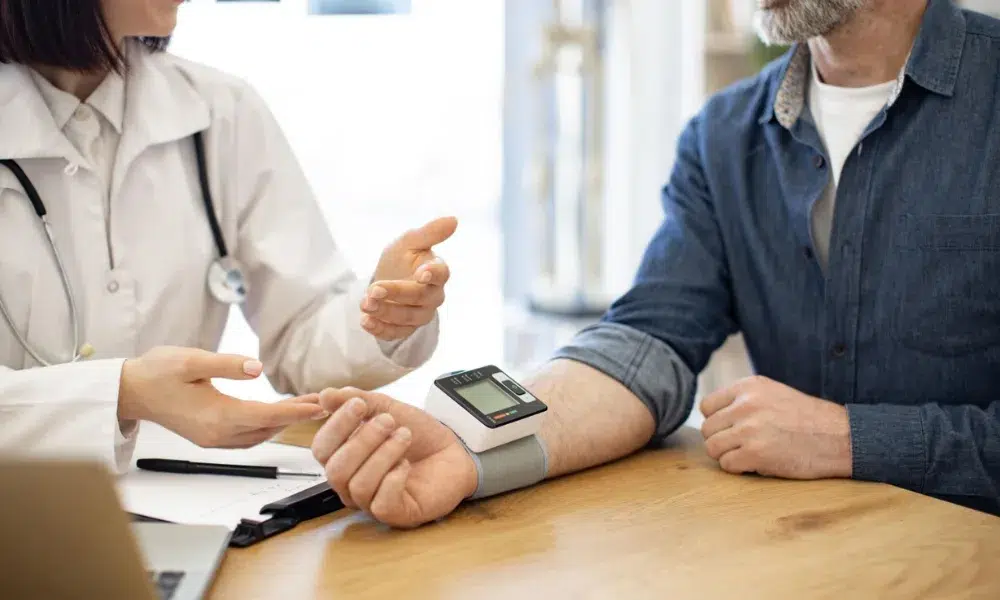
Doctor Conducting Preventive Health Check
Cardiovascular Health
Your GP may talk to you about your overall cardiovascular risk, which can include:
- Blood pressure measurement
- Cholesterol levels (via a blood test)
- Discussion of family history of heart disease or stroke
- Lifestyle factors such as smoking, alcohol consumption and exercise
Diabetes Risk
Risk of Type 2 diabetes increases with age, weight, family history and lifestyle. Your GP might talk to you about your individual risk of diabetes and if you should be tested for diabetes.
Weight and Lifestyle
Long-term health is influenced by body weight, diet, physical activity, alcohol consumption and smoking. A GP discussion about lifestyle is not a judgemental discussion; it’s about what is realistic and sustainable for you.
Mental Health
Although stress, anxiety, low mood and burnout are equally common among men, they are less likely to seek help for mental health issues. A men’s health checks is a great time to discuss how you’re feeling physically or emotionally without judgment.
Sexual and Reproductive Health
This can be general conversations about sexual health, questions about fertility, or anything you’ve noticed. These conversations are confidential and are based on your comfort level.
Prostate Health (Age and Risk Dependent)
A GP might discuss prostate health with some men, especially if they are over 50 or have a family history of prostate problems. This is always personalised, depending on your age, symptoms and personal risk factors, and is never a one-size-fits-all test.
Age Isn’t the Only Factor, But It Does Matter
There is no universal checklist for all men at all ages, but there are some general patterns to be aware of:
The 20s and 30s
A good time to get to know a regular GP, talk about lifestyle habits and identify any family history that may be relevant later in life.
The 40s
Cardiovascular risk factors (such as blood pressure and cholesterol) become more important to track, especially if there is a family history of heart disease or diabetes.
50s and older
Discussions can include prostate health, continued cardiovascular surveillance, and general chronic disease prevention.
These are general guidelines and not rules. Your GP will take into account your personal history and risk factors, and not just follow a checklist; that’s why it’s more important to talk to your GP than to follow a “test at this age” guideline.
When to see a GP?
It is not necessary to wait for a scheduled appointment to see the GP. If you see any of the following signs, make an appointment:
- Constant tiredness that does not go away after sleeping
- Loss or gain of weight that is unexplained
- Chest pain, shortness of breath, or abnormal heart rhythms
- Ongoing changes in mood, motivation or sleep
- Changes in the urine, including more frequent urination or pain while urinating
- If you have any new or unusual symptom, no matter how minor it may appear
There is no specific reason that you need to see a GP. The symptoms that you might normally shrug off are the ones that are usually worth discussing in an appointment.
What to do before your men’s health checks
With a little preparation, you can make the most of your appointment:
- Record any symptoms, no matter how mild they may be.
- Record family history of diseases such as heart disease, diabetes, and cancer.
- Take a list of any medications or supplements that you are currently taking.
- Consider lifestyle factors such as activity, alcohol consumption, smoking, sleep and stress.
- Make sure you have any questions you may have in mind, even if you are not sure if you want to ask them.
Don’t be rushed or embarrassed. GPs have these discussions on a regular basis, and nothing you raise will be too small or unusual to discuss, just
FAQs
1. At what age should men begin to have regular health checks?
There is no set age to begin. For many men, it’s best to develop a regular GP relationship in their 20s or 30s, and from the age of 40 and beyond, the focus should be on cardiovascular and chronic disease risk (depending on personal and family history).
2. Do I have to have a blood test every time I visit my GP?
Not necessarily. Whether a blood test is appropriate depends on your symptoms, risk factors and how recently you’ve had one. Your GP will tell you what is relevant to you.
3. Does a men’s health check just focus on physical health?
No. Mental health, sleep, stress and general wellbeing are equally important as physical measurements such as blood pressure or cholesterol.
4. If I don’t have any symptoms, why go?
Yes. High blood pressure or high cholesterol may not have any symptoms. A check-up isn’t a diagnosis of symptoms but an understanding of your risk profile.
5. Will I need a prostate check?
Not automatically. During discussions about prostate health, your GP will consider your age, symptoms and family history, and won’t use a blanket test for all patients.
6. When should I have a general health check?
This is individual to each person. Your GP will be able to suggest an appropriate review timeframe, depending on your age, risk factors and any other health conditions you have.
7. Is it possible to discuss mental health with GP at a routine appointment?
Yes, absolutely. It’s easier for many men to discuss mental health issues during a general visit than during a mental health visit.
8. If I don’t know what I need, can the GP help me?
Yes. It is not necessary to have a specific set of tests or checks in mind beforehand. One of the GP’s job is to ask the right questions and steer the discussion according to your past and any concerns you may have.
Talk to Your GP About Your Health Risks
A men’s health check is not a diagnosis of a problem, but rather an understanding of your body a little better and an early detection of potential problems when they are most manageable. It may be time for a general health check-up, or you may not have been seen by a GP for a long time, so it’s worth arranging a discussion about what’s right for you.
The team at Belconnen General Practice is ready to assist you in taking that initial step by discussing your personal health risks or arranging a suitable check.